

Seven MENA Startups Rebuilding the Region's Grocery Supply Chain
Across Egypt, Morocco, Saudi Arabia and the UAE, seven B2B platforms are digitising how neighbourhood stores order stock, access credit and manage day-to-day operations.

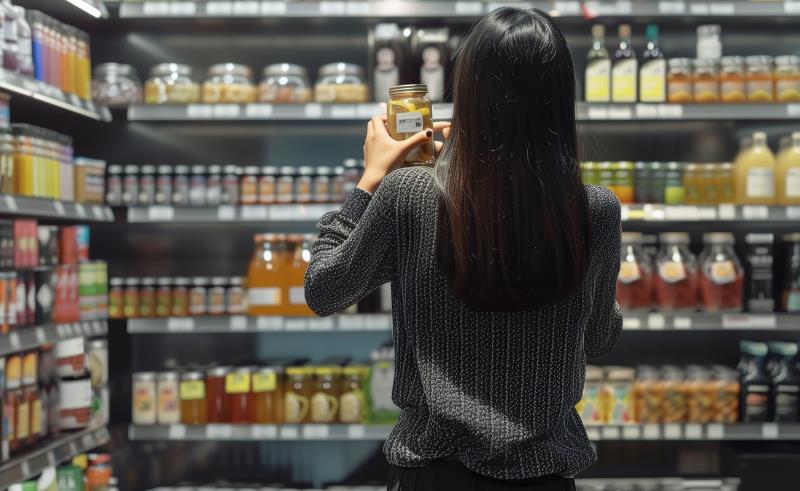
For decades, the neighbourhood grocery store across Cairo, Casablanca, and Riyadh ran on the same informal machinery: a shopkeeper calling a wholesaler, haggling over prices, waiting on a delivery that might or might not arrive on schedule. It is a system built on relationships and guesswork rather than data, and it has proven remarkably durable, in part because the informal retail sector still accounts for the overwhelming majority of grocery sales across much of the Middle East and North Africa.
What has changed is the technology now sitting quietly behind that counter. A wave of B2B retail startups has emerged across the region over the past several years, each attacking a version of the same problem: how to move millions of small, fragmented transactions onto a single digital rail. Some, like Sary and Retailo, have built supply networks that connect independent retailers with manufacturers and distributors, while others, like DTEK.ai and Weelo, have taken a software-first approach to digitizing the systems behind the store. Chari and Talabeyah, meanwhile, are using digital procurement as a starting point for everything from embedded finance to demand forecasting.
What unites them is a bet that the corner store is not a relic to be replaced by e-commerce, but an enduring piece of infrastructure that simply needs better tools...
Chari

2020, Casablanca, Morocco
Morocco, Tunisia, and Côte d'Ivoire
Last Funding: $12 million Series A, October 2025
Co-Founders: Ismael Belkhayat and Sophia Alj
Chari lets independent grocery and convenience stores order wholesale inventory digitally, cutting out the trip to a traditional wholesaler entirely. Its acquisition of fintech startup Karny.ma signalled where the company sees its next phase of growth: extending credit and embedded payments to merchants who have historically operated on cash. By combining purchasing data with financial products, Chari now spans both procurement and inventory management across Morocco and Francophone Africa.
DTEK.ai

January 2021, Dubai, UAE
UAE
Last Funding: $10 million pre-Series A, August 2022
Co-Founders: Sanad Yaghi, Shadi Joulani, and Ali Alsayegh
What launched as Dukkantek, an operating system for neighbourhood grocery stores, has since rebranded into DTEK.ai, reflecting a deeper pivot toward artificial intelligence and computer vision. The platform still handles cloud-based POS, inventory management, supplier ordering, and loyalty programs, but its distinguishing feature is using computer vision to automate shelf monitoring, catching stock losses that would otherwise go unnoticed until a shelf sat empty.
Talabeyah
July 2020, Cairo, Egypt
Egypt
Last Funding: $1.1 million pre-seed, October 2021
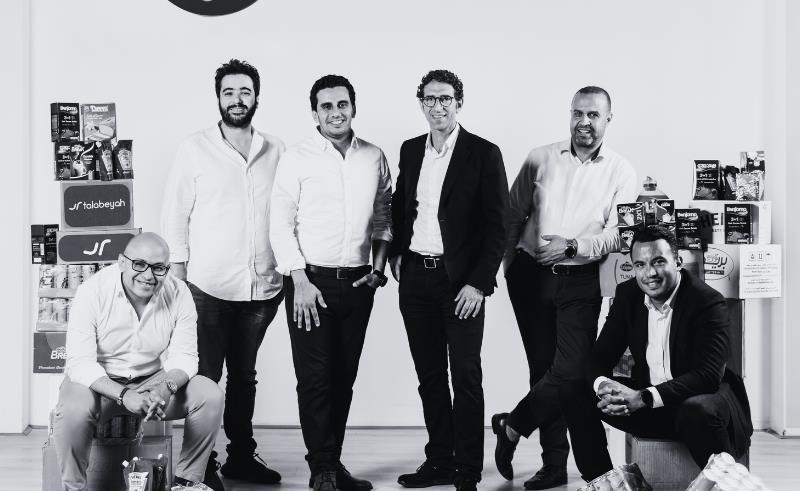
Co-Founders: Karim Nassef, Amr Abbas, Khaled Hussein, and Adel Hodroj
Talabeyah addresses a problem that predates most of the technology on this list: the inefficiency of phone-based ordering between Cairo's grocery stores and their suppliers. The platform replaces that fragmented, in-person process with a single online ordering system connecting retailers directly to FMCG suppliers, giving stores faster replenishment and suppliers demand forecasting tools and retailer insights previously invisible to them. Talabeyah was acquired by MNT-Halan in 2022 for an undisclosed amount.
Weelo

2018, Cairo, Egypt
Egypt
Last Funding: Six-figure seed round, March 2021
Co-Founders: Mohamed Asfour and Sophia Korayim
Weelo has the longest history on this list, and its evolution reflects how differently retail technology can develop when it starts from the consumer side rather than the supplier side. The company began as an online grocery marketplace before expanding into software for supermarkets and suppliers, an approach that treats online fulfilment and back-office operations as two halves of the same problem rather than separate ones.
Retailo

2020, Riyadh, Saudi Arabia
Saudi Arabia, UAE
Last Funding: $15 million, November 2023
Co-Founders: Talha Ansari, Wahaj Ahmed, and Mohammad Nowkhaiz
Retailo has scaled across multiple markets, connecting independent retailers with suppliers through a digital ordering platform. Shop owners order inventory through a mobile app with next-day or same-day delivery, backed by fulfilment centres and demand forecasting tools. More recently, Retailo has pushed into embedded financial services, offering merchant credit while brokering promotional partnerships with FMCG brands seeking shelf space in thousands of independent stores at once.
Sary

2018, Riyadh, Saudi Arabia
Saudi Arabia, GCC
Last Funding: $110 million SILQ Group funding round, April 2025
Co-Founders: Mohammed Aldossary and Khaled AlSiari
Sary is arguably the most heavily capitalized name on this list, having become one of the best-funded retail technology startups in the MENA region through successive venture rounds. The marketplace connects retailers, from grocery stores to pharmacies to restaurants, directly with manufacturers and distributors, replacing opaque wholesale pricing with something closer to transparency, while a working capital arm helps merchants manage cash flow without relying on informal credit. In 2025, Sary merged with Bangladesh-based ShopUp to form SILQ Group, which subsequently raised $110 million.
- Previous Article Egypt’s Entrepreneur Awards Set December 4th Return
- Next Article QME Solutions Wants to Kill the Paper Queue Ticket