
NuWatt is Turning an Energy Crisis Into an AI-Powered Solar Platform
Beirut-founded NuWatt is using AI to turn solar data into smarter energy use for homes and businesses globally.
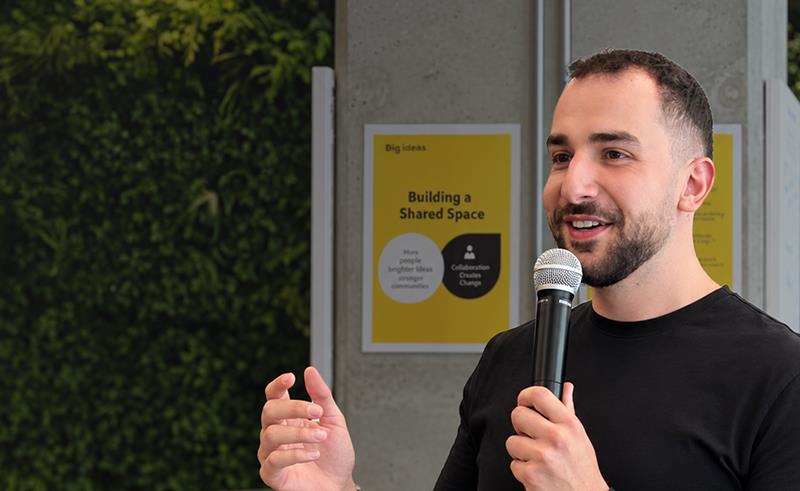
In 2019, Lebanon's financial system collapsed, and with it went the reliability of the national grid. Households, factories and businesses were suddenly left to generate their own power or go without. Solar, once a marginal investment, became close to a necessity almost overnight.
The crisis exposed the gap that would eventually be filled by NuWatt.
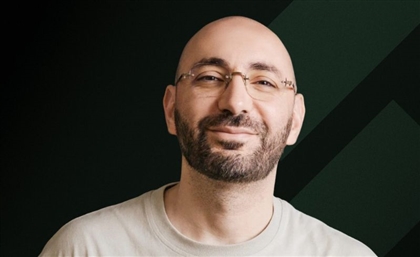
Founded by Ali Zinedine in 2025, the Beirut-based company offers a hardware-free, AI-driven solar monitoring platform that delivers real-time performance insights, diagnostics and energy management for homes and installers. The company is registered in Qatar through QSTP, backed by Qatar Foundation, and has raised the equivalent of $150,000 in pre-seed funding so far as it works to scale that idea across the region.
Zinedine's own path into energy started well before the crisis. He graduated with a degree in Economics from a university in Beirut before joining his family's business, which has been running since 1987 and entered the energy systems market in 2010. Within the company, he helped build out its solar division, expanding it from a single branch to three as the wider business grew to five branches across Lebanon.
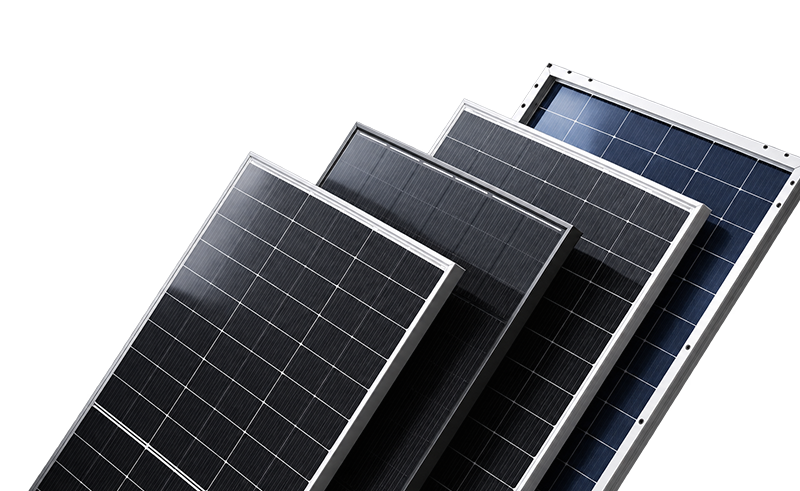
When the financial system collapsed in 2019, that experience put Zinedine in the middle of Lebanon's sudden shift to solar. As the national grid became increasingly unreliable, households, factories and businesses turned to solar to generate their own power. Zinedine installed close to 3,000 solar sites across Lebanon, building supplier relationships that stretched to Jordan, the UAE and China.
With the solar market expanding rapidly, Zinedine also found himself training the engineers installing these systems, walking them through installation practices and site capacity as the industry raced to meet demand.
“We benefited a lot from that boom,” Zinedine said, referring to the growth it brought to the solar division within his family's business.
But that experience gave him a close-up view of another problem. The monitoring apps bundled with solar systems were often too technical for ordinary homeowners, while the engineering companies installing them routinely lost visibility into their clients once a system went live.
Zinedine searched for a platform that could solve both problems and couldn't find one. “I couldn't find one,” he said. “So, I made it from scratch.”
He began assembling a team in November 2024, but development did not begin until September 2025. By mid-March 2026, NuWatt was live, taking the company from active development to launch in less than seven months.
“We want you to understand energy just like you understand your health app today,” Zinedine said. “That helps them a lot to honestly adopt our application and find it even user-friendly.”
That principle shapes how the platform works. NuWatt connects to a home's or site's solar inverter through software and existing APIs, with no hardware installation and no technician visit required.
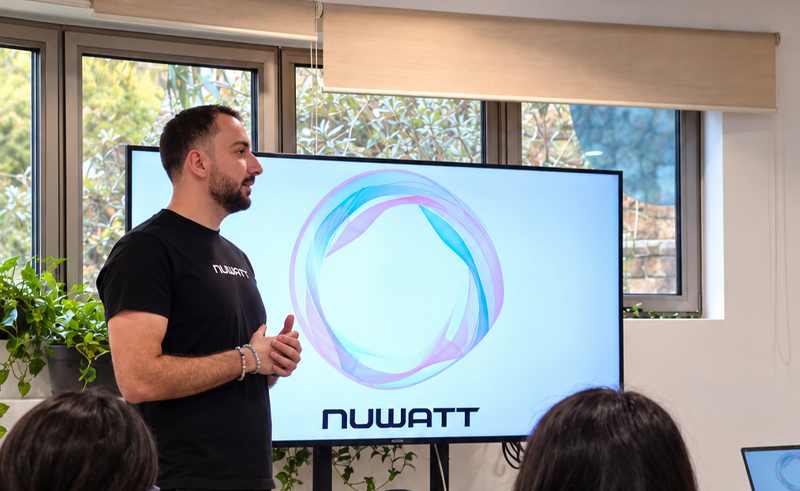
And when asked how long it takes to install NuWatt, “Under three minutes,” Zinedine said, describing how long it takes a new user to connect their system. “We don't require any hardware. We don't require any visits.”
The simplicity on the user side, however, hides a more complicated problem behind the scenes. NuWatt needs access to the APIs of the hardware manufacturers that make the inverters powering these solar systems. According to Zinedine, most of those manufacturers are Chinese companies that control around 80% of the global market, while access to their API documentation is not readily available to the average developer.
That makes connecting different solar systems less straightforward than it might appear. NuWatt has had to build relationships and connections across the hardware ecosystem to make its software work across different systems, while keeping the experience on the user's end almost entirely software-based.
Behind that simplicity is a machine-learning engine that pulls in production data, battery storage levels, consumption patterns and weather data to generate recommendations aimed at improving a site's efficiency. The result is meant to turn the technical information produced by a solar system into something a homeowner can actually understand and act on.
The platform runs on two tracks. On the consumer side, homeowners, businesses and institutions monitor their own systems directly. NuWatt currently tracks more than 500 sites, spanning households (roughly half of all sites), industrial plants, commercial buildings, restaurants, a hospital, municipalities and even ministries. On the business side, NuWatt gives installer and engineering companies a 'ticketing system' to track clients post-installation, solving the exact visibility gap Zinedine encountered in his own solar business.
The company has also gone through Berytech's Clyntech programme, an accelerator focused on pitching, training, communication and partnerships. An AUB-affiliated incubator helped build out pitch decks and financial models and connect the team with angel investors, while NVIDIA's Inception programme has provided cloud credits that let an early-stage startup store data without the infrastructure costs that would otherwise come with it.
If the crisis explains why NuWatt exists, it also explains how Zinedine pitches it, not as a sustainability play but as a resilience one.
“Nothing is guaranteed with the state. Nothing is guaranteed with oil,” Zinedine said before pointing to what he calls a global shift toward ‘energy security’: countries and households alike choosing to generate their own power rather than depend on a grid, or a geopolitically exposed supply chain, that can fail them.
For Zinedine, that shift is visible even in countries whose economies have historically been built around oil and gas. Qatar, where NuWatt is registered through QSTP, is investing in some of the world's largest solar projects despite remaining primarily a gas-producing country.
“Qatar is investing in some of the world's largest solar projects, even though it's primarily a gas-producing country,” Zinedine said.
He also points to Gulf oil producers now pushing solar adoption through new legislation, and to Egypt's own rapid embrace of renewables, as evidence that the shift Lebanon experienced in 2019 is no longer a local story but a regional one.
That framing has shaped how he reads NuWatt's early traction.
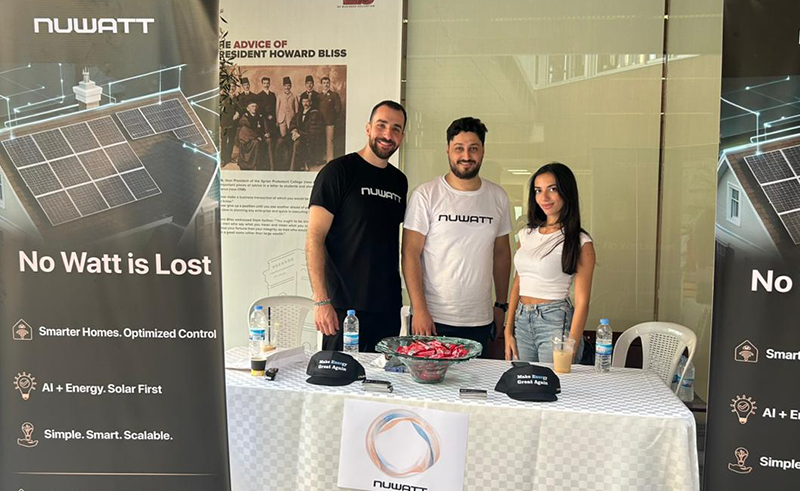
“All solar companies that I partnered with or talked with tried to build a solution like ours and failed,” Zinedine said of the B2B side of the business.
For households, that means making the investment in solar work harder. A system can cost between $3,000 and $5,000 to install, while generator electricity can still cost around $300 every six months. NuWatt uses data from the system, including solar production, battery storage, consumption and weather conditions, to show users where they can improve efficiency and reduce unnecessary costs.
For Zinedine, that is part of the bigger argument for making energy easier to understand. Solar may be the entry point, but the problem NuWatt is trying to address is broader: helping people see how much energy they are producing, storing and using, and what they can do with that information.
“We want to be the go-to energy app globally,” Zinedine said. “Energy, not just solar.”
Reflecting on the experience so far, Zinedine describes the earliest stretch of building NuWatt as feeling like carrying every role, every problem and every decision alone, tiring, at times close to unbearable, until the moment a team formed around him and it wasn't.
“That's when exhaustion turns into gratitude, for the people who chose to carry the dream with you,” he said.
- Previous Article Everything You Need to Know About DarE Accelerator
- Next Article Innovation City Launches AI-Powered Business Registration in RAK