

Cairo-Based Startup Zr3i Turns Palm Trees Into Carbon Income
A Cairo startup is reworking the value of date palm trees, turning what they absorb into something farmers can finally earn from.
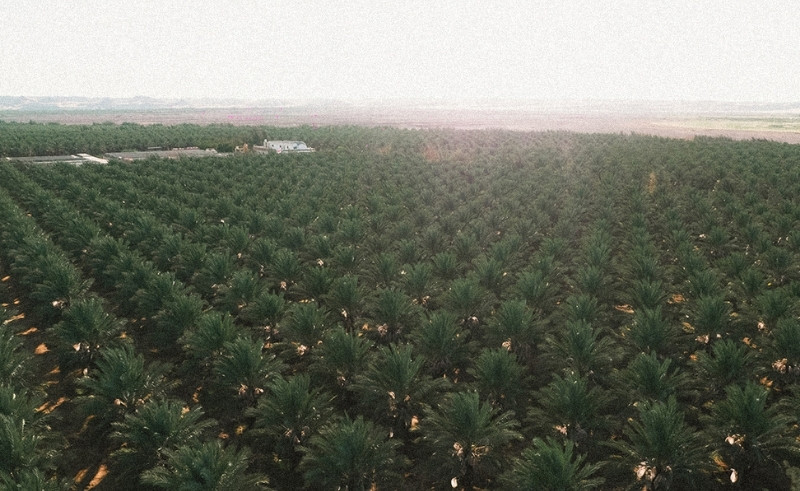
Egyptian, Jordanian, and Gulf-region farmers have been growing date palm trees for millennia. They are culturally sacred, economically crucial, and ecologically relevant. On average, each grown-up date palm tree captures 830 kg of atmospheric CO2 in above-ground biomass. If you multiply that number for all date palm trees grown across the Arab world, you will get an impressive ecological asset, completely ignored by global markets up to this point.
This is the gap filled by Zr3i (pronounced zar-ee), derived from the Arabic term meaning ‘my crops’. The Cairo-based company acts as a carbon infrastructure provider, using satellite technology to monitor palm trees and transform their carbon absorption into verifiable carbon credits, allowing farmers to be paid for the environmental impact they are already making.
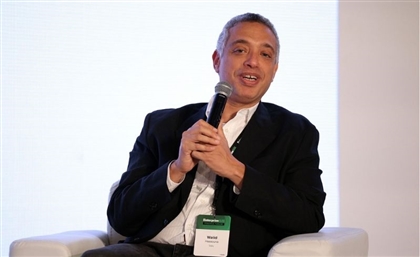
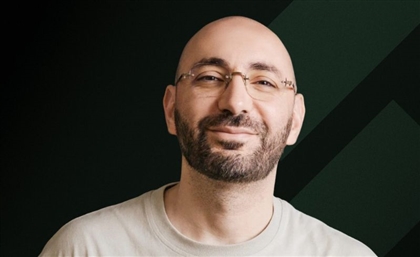
"After years of work in Egyptian agriculture, there was only one thing that became crystal clear," founder and CEO Walid Nasr tells StartUpScene. "Arab farmers are making an incredible contribution that nobody is paying them for. Date palm trees in the Middle East and North Africa absorb a great deal of atmospheric carbon, yet this contribution is invisible to the world."
Over the past four years, the company has transformed from a farm management app into a platform aiming to become the standard carbon infrastructure provider for nature-based climate assets across the MENA region. With headquarters in Cairo and active operations in Egypt, Jordan, and the UAE, the company has secured 8.5 million date palm trees and aims to secure its first carbon credits by 2027. The plan is to enter 12 countries within two years, engage one million hectares by 2030, and become the standard-setting infrastructure player in the Arab world’s agricultural carbon market.
The central question Nasr asked when Zr3i was still finding its identity was one of logistics. "How do you calculate the impact made by 200 million date palm trees? How do you visit all those farms?" The answer, surprisingly, turned out to be pretty obvious: "But the satellite can monitor absolutely everything every single day. That's the angle through which we could transform an invisible ecological asset into something visible, measurable, verifiable, and monetizable for the farmers that created it."
The name implies the mission the company follows - one that puts farmers at its core. "Most agricultural technology is built for investors or governments, not for the farmer holding the shovel," Nasr says.
In practice, farmers do not pay anything upfront and do not lose control over their land or harvested fruit. What Zr3i provides is an additional revenue stream based on growing date palms. The farmers receive carbon revenue through trees and the ability to capture CO2, while the technology platform does the rest in the background. "Technology works hard behind the scenes, while what farmers experience is easy and understandable," Nasr explains.
As for technicalities, Zr3i's platform calculates 18 or more satellite vegetation indices (NDVI, EVI, SAVI, NDWI, NDRE), comparing them with date palms enrolled in the system and using the data in further calculations for monitoring, reporting, and verification according to international standards set by Verra VCS (VM0042 and VM0047). Nasr insists that all infrastructure must be in-house since all credibility lies in the data. "If you outsource the MRV layer, you outsource your credibility in carbon credits. I have a strict rule: build the unique thing, and buy everything else," Nasr explains to StartUpScene.
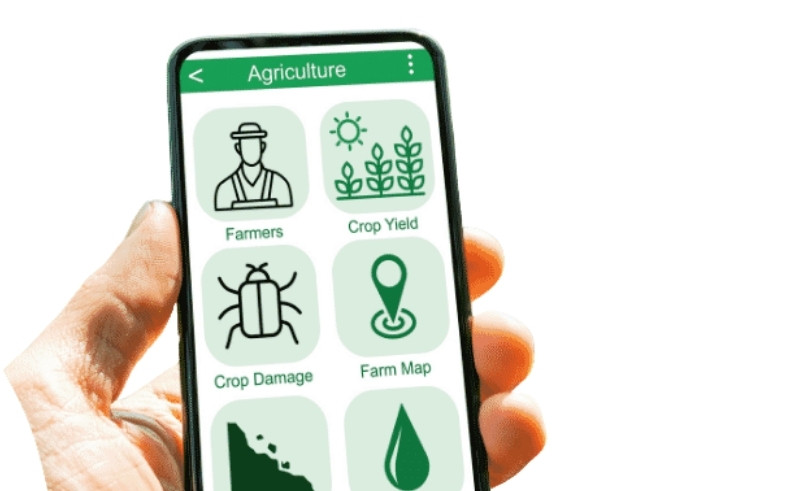
From the farmers' perspective, all they can see is a simple dashboard - their trees, their carbon balance, their projected income, and a WhatsApp message. "WhatsApp. Full stop," Nasr says when responding to the question of which communication channel works the best for MENA farmers. "Farmers use it anyway, and that's how we connect with them. Asking a farmer to download a new app or log into a portal is friction that kills relationships. We go where people already live."
Nasr founded Zr3i in 2021 with initial investment from Flat6Labs Cairo, Village Capital, and ASAP. The total seed funding was $950,000. As Nasr explains, the company launched during a tumultuous period for Egyptian agriculture, which accounts for 12 per cent of the GDP and 15 per cent of the population's employment yet lacked any tech solutions. In addition, Egyptian agricultural lands, measuring six million acres, face numerous challenges due to water scarcity and climate change. Sixteen million Egyptians have to feed from resources limited in size.
In those first years of activity, Zr3i followed the path of a traditional agritech company, offering crop monitoring, weather forecasting, data analysis, and even data-based insurance products. This was all the basis of a broader project. The decision to move towards carbon markets crystallised in 2025 as the amount of valuable climate impact made by date palm trees remained unrecognised by global markets, although the company did notice. "We saw 200 million date palms across the Arab world generating real climate value that global markets were completely ignoring because no one had built the bridge to connect it,” Nasr says.
"It means almost rebuilding the whole business model. Carbon markets are slow, measured in years, not months. Farmer contracts had to be restructured and the platform had to be rebuilt. The whole team had to shift its thinking from startup speed to long-game discipline."
The challenge of earning farmers' trust during the transition involved something that dates back to the era when there was no such thing as technology. Nasr and his colleagues worked with communities, explaining the technology and answering questions from association presidents and community leaders instead of just individual farmers. The main question was straightforward: "When am I going to earn money from that technology?" The straightforward answer was: "It's going to take some time." This answer, along with the lack of upfront costs, helped establish the relationship with the farmers.
As Nasr illustrates the story of farmers' trust, it does not include anything but a straightforward statement. "Let me be frank with you, the first carbon payments to farmers will come after the planned timeline. I'm not going to invent stories that are not yet real. A farmer in Egypt listened to all the explanations, asked some questions, and then asked me: 'Can my brother's farm join as well?'"
The landscape of the global voluntary carbon market is characterised by both promise and buzz. The voluntary carbon market experienced several turbulent years of scandal regarding inflated credit claims and falling prices for offsets. Companies have become less eager to invest in them as it is difficult to track whether they deliver on their promises. However, as Nasr explains, "Each of our carbon credits is connected to a specific farmer, a specific tree count, an independent audit, and globally recognised VCS standards. We can show a paper trail of the entire process."
The target customers of Zr3i are large corporations that have a clear net-zero commitment stated and ready to be proven in front of authorities, regulators, and annual reports. According to Nasr, "They do not purchase carbon credits as a simple tool to reduce their emissions. They support rural livelihoods and help food-producing communities to prosper. That's how ESG impact is achieved. We are integrating this impact layer into our projects."
"This amount is meaningful for even a small number of palms. It is certainly not enough to substitute farmers' other activities, but it can serve as a baseline. It helps the farmer's household, especially if they reside in remote regions where every additional source of income is crucial."
The current funding journey of Zr3i is in the middle stage for a typical climate-tech project - it is far past the idea stage yet to become fully commercial. At the moment, the company is raising its bridge round, which, as Nasr clarifies, is not a seed round. "The platform is operational now, we have farmers enrolled in it, and all the required documents are prepared for certification. Now is the time to raise a bridge round, reaching first issuance by 2027."
To navigate the gap between rounds, Nasr counts on three things. First of all, non-dilutive European climate funds, which extend the runway for the company. Second, strategic investors that are willing to gain exposure to carbon markets instead of making instant profits. Third, strict discipline: the bridge round is specifically sized to reach carbon credit issuance, not to build unnecessary empires. "There is the wall. The way through is simply passing through it with the correct partners."
"The government should not be seen as a bureaucratic obstacle that needs to be managed. It is a structural requirement to cultivate," Nasr says. So far, he has presented his company to the EU ZIRA3A programme on rural development integration, met ministries of agriculture, the ministry of environment, and the ministry of investment in Egypt, and gained relationships with similar institutions in Jordan and the UAE. "When we speak with the Ministry of Agriculture and Land Reclamation, the Ministry of Environment, the Ministry of Investment, and Financial Regulatory Authorities, we are not coming to convince them of our idea. Instead, we demonstrate to them how our project advances their national priorities: farmers' incomes, climate goals, foreign investment attraction, and rural development. We make it easy for them to say yes to us."
There is an 18-24 month timeline for global certification from the moment of signing to the moment of receiving payment. Farmers operate in yearly cycles, harvesting once a year and assessing their position again. Asking farmers to hold faith for such a long period of time without receiving payments might be tricky, Nasr admits. "We try to mitigate it through communications, regular visits, and transparency. Still, we need farmers' trust before issuing credits in 2027. We are aware of that responsibility."
Five years from now, Nasr sees Zr3i as an infrastructure provider of nature-based carbon assets in the Arab world. By 2030, when companies will be forced to act, Zr3i should be a credible and scalable carbon supplier.
- Previous Article KSA Travel Platform Almosafer Become’s First App to Launch on ChatGPT
- Next Article ThrowMeNot Turns Supermarket Food Waste Into Profit