

FinBursa: The UAE Fintech Taking Private Investing to the Digital Age
As billions flow into private markets, the Dubai startup believes the biggest opportunity lies in turning relationships into intelligence.

Public markets run on shared infrastructure. Every trader sees the same data, the same prices and the same market in real time. Private markets, on the other hand, remain remarkably fragmented. Capital still moves through personal networks, Excel sheets and inboxes, with investors, family offices and founder building their own map of relationships. FinBursa, a Dubai-based startup launched from Dubai International Financial Centre (DIFC) in May 2025, believes that infrastructure is long overdue.
"Dubai lies at the intersection of capital, entrepreneurship and international business," says Vincent Ruiz, the company's chief operating officer. Over the last decade, the UAE has become one of the few places where family offices, sovereign wealth funds, venture capital firms, private equity investors and founders all create and invest simultaneously. What drew the company there, Ruiz says, was "not just the availability of capital, but the willingness to embrace innovation." The region has moved quickly on fintech, digital assets and regulation, creating an environment where new financial infrastructure can emerge faster than in older financial centres. "The next generation of private market infrastructure will be global in reach, but even more shaped by growing financial centres such as Dubai," Ruiz adds.
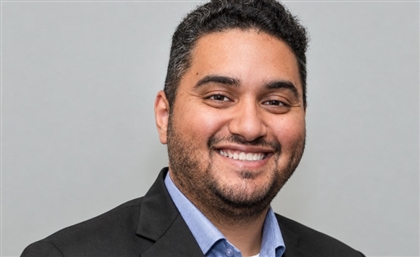
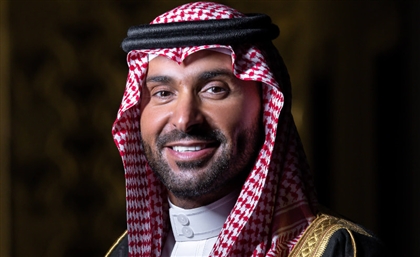
FinBursa was co-founded by chief executive Ismail Badereldine, whose career includes roles at BlackRock, Brookfield Asset Management and private markets software company eFront, alongside Prince Mohammad bin Nawaf Al-Saud, a former investment banker who serves as the company's co-founder and strategic advisor. While Prince Mohammad helps shape the company's long-term direction from Saudi Arabia, day-to-day leadership rests with Badereldine and the executive team. The wider leadership team also draws on experience from Visa, where Ruiz previously worked. "Financial infrastructure that works is ultimately based on trust, reliability and scalability," Ruiz explains. "From Visa in particular, we learned the importance of trustworthy networks and interoperable infrastructure at global scale."
What drove the team to build FinBursa was a growing amount of friction. "Private market technology was largely written for the biggest institutions, those with deep budgets and dedicated engineering teams," Ruiz explains. "Most firms cannot justify investing in every specialised solution available." Mid-market firms typically purchase a CRM and a data room, then manage everything else through spreadsheets and email. The cost extends beyond inefficiency: firms lose visibility into what is happening across their own organisations. "Data is the most valuable asset of every private market organisation," Ruiz adds. "Unfortunately, legacy infrastructure leaves that data siloed in multiple systems. AI can only be as good as the data it receives, and that data can only be good if it is complete."
That premise resulted in two products. The first, FinBursa Access, launched on iPhone and Android in late April 2026, allowing investors to discover private market opportunities posted directly by founders and fundraisers, with materials stored in consent-based data rooms and no unsolicited approaches. The second is FinBursa 360, an operating system that brings together deal management, relationship data, fundraising, reporting and due diligence into a single connected platform. "The biggest challenge in private markets is not a lack of AI," Ruiz says. "It is a lack of connected infrastructure." In FinBursa's view, intelligence emerges from software that can see the full picture across a firm's relationships, deals and data.
What distinguishes FinBursa from the industry it serves is its business model. Traditional brokerage and placement agencies typically earn commissions of between 2 and 5 per cent on successful transactions. FinBursa takes no success fee through Access and instead generates revenue through subscriptions to FinBursa 360. "We set out to build infrastructure, not act as a broker," Ruiz says. "Because our revenue comes from software rather than transactions, we remain completely neutral." Whether a deal closes, stalls or falls apart, he says, the company's role and income remain the same. "We have no financial incentive to promote one opportunity over another, influence investment decisions, or encourage deals to proceed when they should not."
That is a pretty strong argument, although it is unproven. The company asks an industry built on discretion and warm connections to redirect some part of its activity through a filter. Incumbents it wants to displace have decades of relationships and the comfort of the status quo on their side.
To become a Bloomberg for alternative assets is a long journey from a fledgling app and subscription service. The wager rests on the belief that the people who move private capital want control and speed more than they want hand-holding, and that belief has yet to be tested at scale.
What keeps the wager from becoming an argument for replacing people altogether is Ruiz's insistence that software should assist rather than replace them. Private markets, he argues, will always remain a people business. "Relationships, exclusivity, and trusted middlemen are not inefficiencies to be eliminated by technology," he says. The role of software is narrower and, he would argue, more honest: to make those relationships more legible and more scalable without flattening them. "Transparency, in our view, does not mean making private information public," he says. "It means giving participants better visibility into their own relationships, processes and opportunities while maintaining strict controls over confidentiality and access."
Ruiz is equally clear about where the technology should stop. "We do not believe AI makes investment decisions," he says. "Private market investing remains fundamentally a people business." Evaluating management teams, reading markets and negotiating through uncertainty remain human responsibilities. "AI should not eliminate judgment," he continues. "It should make it better."
If there is a theory beneath all of it, it is about how capital flows. "The MENA startup ecosystem has matured to the point where talent and money are both abundant and the binding constraint has moved," ," Ruiz says. "We want to ensure that the right capital reaches the right opportunities at the right time." A family office in one market might never see an opportunity relevant to another. A founder raising money may struggle to identify the right investors. Personal networks remain valuable, but they do not scale easily across borders. "The myth I would most like to retire," Ruiz says, "is that the best opportunities are to be found only within the networks you have. Now it is not only about managing relationships as the ecosystem becomes more global and interconnected. It is about developing them intelligently."
In five years' time, Ruiz expects private markets to be more connected, more efficient and still fundamentally people-driven. What FinBursa hopes to become is the trusted infrastructure beneath that future. For now, what the company has is a clear understanding of the problem and a conviction that it can build a better way to solve it. "The future of private markets is not about developing more tools,” Ruiz says. "It's about developing a smarter, more-connected infrastructure that is accessible to firms of every size."
- Previous Article AI Unicorn Multiverse Raises €500 Million With Qatar Development Bank
- Next Article QME Solutions Wants to Kill the Paper Queue Ticket