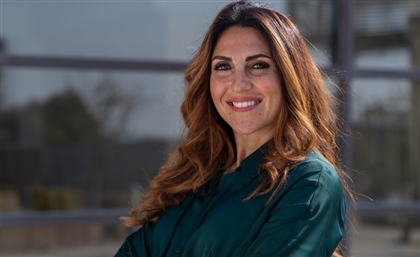


Nanovate is Building AI That Speaks Arabic, Not Just Translates It
With only 3% of the internet in Arabic, this Egyptian startup is building the missing data itself, one dialect at a time.
How even is the playing field when it comes to language in AI, when over 400 million people speak Arabic but only a fraction of AI tools truly speak back?
For all the progress AI has made over the past few years, language remains one of its quietest inequalities. The technology may present itself as universal, but much of it continues to think, respond and learn through English first. Arabic often arrives later, translated into the conversation rather than built into it.
That imbalance begins with the data. Large language models learn from enormous volumes of text available online, yet only a small fraction of publicly available internet content exists in Arabic. For one of the world's most widely spoken languages, the conversation has long started elsewhere.
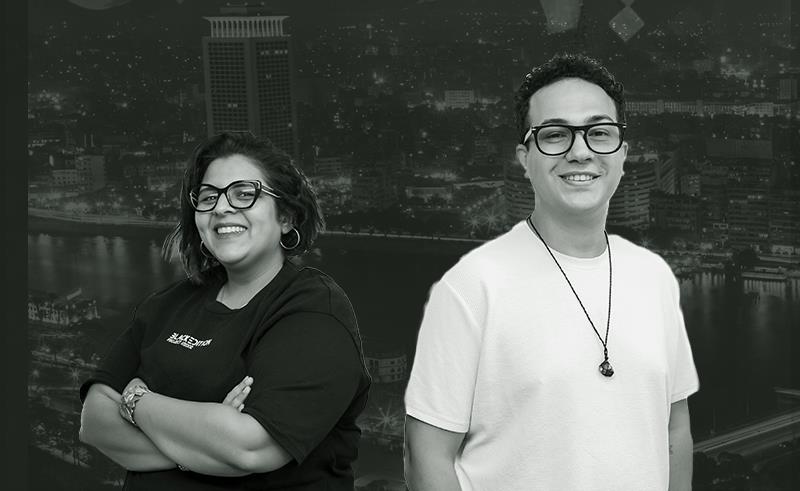
Founded in January 2025 by husband-and-wife duo Ahmed Gamal and Nancy Madbouly, Cairo-based Nanovate develops end-to-end Arabic AI solutions. Nine months after launching, it raised $1 million in pre-seed funding to expand what it describes as Arabic-native AI infrastructure for the MENA region.
Rather than building another AI assistant, Nanovate is trying to answer a different question: what would AI look like if Arabic wasn't treated as an afterthought? Its platform allows businesses to build AI agents, automate workflows and deploy voice and chat assistants in Arabic, but beneath those products sits a much larger ambition, making Arabic something AI understands rather than something it simply translates.
"Only around 3% of online content is in Arabic," Gamal said. "The data that AI can learn from simply isn't there. Even voice pronunciations don't exist. We had to create this from scratch."
Creating Arabic-native AI, the founders quickly realised, wasn't simply a matter of building on existing models. It first required building much of the data those models could learn from.
The challenge becomes even more pronounced once Arabic stops being treated as a single language. While Modern Standard Arabic provides a common foundation, everyday conversations are shaped by regional dialects, each with its own vocabulary, expressions and cultural references. Teaching AI to understand Arabic, the founders argue, means recognising those differences rather than flattening them into one standardised version.
"We support 22 Arabic dialects," Gamal said. "The whole idea is understanding how Arabic is formed, how words change across countries, and what they mean in different places."
That diversity extends beyond dialects alone. Across the region, Arabic exists alongside different linguistic influences, from countries where French remains deeply embedded in everyday life to others where English is more prevalent. Yet despite those differences, Arabic remains the common thread.
"As Arab countries, we're all a bit different," Madbouly said. "Some people speak French very well. Some people speak English very well. We have different dialects with different linguistic influences. But, ultimately, it all waters down to a form of Arabic dialect. That was the reason we started."
With little publicly available data to work with, the team began creating much of it themselves. They generated task-specific conversations, drew on dictionaries and podcasts from across the region, and gradually refined their models through customer feedback from countries including Libya, Iraq, Saudi Arabia, Kuwait and the UAE.
"Most of the time, there's not enough data online," Gamal said. "We used to make our own data and train the models ourselves."
The result is a platform designed to make AI more accessible to businesses that recognise its potential but lack the resources to build it in-house. Rather than requiring technical expertise, Nanovate allows users to create AI voice and chat agents, automate workflows and integrate them into existing business operations through a no-code interface.
"We wanted AI to be accessible for small and medium-sized businesses," Gamal said. "They know the value of AI, but they don't have the resources to build it themselves."
Simplicity became just as important as language. While the platform is built around Arabic, the founders wanted it to be usable by people with little or no technical background. Instead of writing code, users describe what they want through text or voice, while an AI assistant guides them through building agents and automations.
"You don't have to understand anything technical," Madbouly said. "You tell the assistant what you want, and it creates it for you."
That vision looked very different when Nanovate first began. The company's earliest work centred on Arabic AI voice agents, prompted by businesses searching for conversational tools that simply didn't exist at the time.
"We had a client looking for an AI call centre in Arabic before AI agents were really a thing," Gamal said. "We looked at the existing solutions and realised they didn't care about the region or the Arab world."
What started as a single voice solution quickly expanded. Today, the platform serves businesses across sectors including healthcare, finance, logistics and education, while the founders increasingly see Nanovate less as another AI application and more as infrastructure on which others can build.
For the founders, however, success isn't measured solely by the sophistication of the technology. One of the company's earliest healthcare clients, a paediatrician, used an AI-powered system to triage messages from parents before directing urgent cases to hospital.
"One of the best pieces of feedback we've ever received was that we helped save the lives of four babies," Gamal said. "That's our goal. To make a difference and use AI in the right way."
Building the technology was only one part of the challenge. Convincing businesses and investors that Arabic-native AI deserved building in the first place proved to be another.
"When we started, no one knew who Nanovate was," Gamal said. "We were going directly to large companies, but we also had to educate the market about AI itself."
That began to change after the company joined Raya FutureTECH before later entering MINT by EGBANK, two programmes the founders credit with helping refine both the product and the business around it. Beyond mentorship, they became early testing grounds for Nanovate's platform, with fellow founders providing feedback on beta versions while introductions to investors and enterprise partners helped accelerate its commercial roadmap.
"The whole community at MINT is really beautiful," Madbouly said. "We learned from the other startups, our mentors understood exactly what we needed, and everyone was accessible whenever we picked up the phone."
The pre-seed funding gave Nanovate the resources to grow its team, launch its platform publicly and begin looking beyond Egypt. The company is now working with clients across the region and plans to expand further into Saudi Arabia and the UAE, markets the founders see as central to the next phase of growth.
Yet, for Madbouly and Gamal, success abroad depends on proving the model at home first.
"I don't want to leave Egypt without succeeding in Egypt," she said. "Once we've created real use cases and changed the market here, then we can succeed in Saudi Arabia."
Expansion, however, won't solve what the founders see as the region's biggest obstacle. While investment in AI infrastructure across the Gulf continues to accelerate, much of the underlying technology still sits elsewhere, leaving Arab startups dependent on global models and foreign computing power.
"We have the talent," Madbouly said. "We have the resources. What we need is for people to invest in building this here."
Nanovate isn't claiming to have solved that problem. The company still builds on top of existing large language models rather than creating its own, and the infrastructure it ultimately envisions remains a long-term ambition. But for Gamal and Madbouly, that doesn't diminish the importance of taking the first steps.
If AI is increasingly becoming the way people work, communicate and access information, then the question is no longer whether Arabic should be part of that future. It is whether one of the world's most widely spoken languages can continue to rely on technologies built to understand everyone else first.
- Previous Article 7 MENA Startups Transforming Customer Support with AI
- Next Article Roblox to Open Regional Headquarters in Riyadh