

7 MENA Startups Transforming Customer Support with AI
From Cairo to Riyadh, a new wave of startups is teaching AI to actually understand Arabic, dialects and all, and quietly reshaping how the region's businesses talk to their customers.

Arabic dialects have long been a stumbling block for conversational AI, with most large language models trained primarily on English and Modern Standard Arabic and struggling with the linguistic variety spoken across the Gulf, Levant and North Africa. A new cluster of startups across Egypt, Saudi Arabia, Jordan and the UAE has built products specifically to close that gap, developing platforms that understand regional dialects and route customer conversations across WhatsApp, voice calls, websites and social media. Some automate entire support functions; others work alongside human agents, surfacing intent and recommendations in real time. Together, they represent a shift toward enterprise AI built for the region rather than adapted to it.
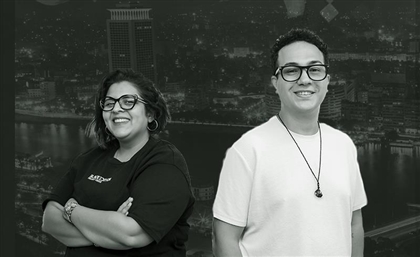
DXwand
2018, Cairo, Egypt
Egypt, Saudi Arabia, UAE
Last Funding: $4M Series A, January 2024
Co-Founders: Ahmed Mahmoud and Mahmoud Gomaa
DXwand built ORXTRA, a platform that deploys AI agents across chat, voice and WhatsApp for enterprise customer service. The system draws on retrieval-augmented generation to pull answers directly from a company's own knowledge base, rather than generating responses from general training data. It handles Arabic dialects alongside English, integrates with CRM systems, and hands conversations to human agents when a query exceeds its scope. Clients span banking, telecom, healthcare, government, retail and utilities, sectors where dialect accuracy and data integration tend to matter more than novelty.
Arabot
2016, Amman, Jordan
Saudi Arabia, Jordan, UAE and wider MENA markets
Last Funding: $1M seed, September 2019
Co-Founders: Abdallah Faza and Kais Hassan
Arabot takes a no-code approach to conversational AI, letting businesses build chatbots without engineering support. The platform runs across websites, mobile apps and social media platforms, and connects conversational AI to the systems businesses already use. Its Arabic natural language processing is designed to capture user requests and intent rather than simply match keywords. Businesses use it to automate customer queries, reduce support costs, handle high conversation volumes and qualify sales leads, functions that would otherwise require scaling a human team.
Labiba.ai
2016, Amman, Jordan
Jordan, Saudi Arabia, UAE, Bahrain and other MENA markets
Co-Founders: Ali Hajjaj and Lina Madadha
Labiba.ai splits its focus between replacing routine support interactions and supporting the agents who still handle complex ones. Its platform includes chatbots and voice bots, but also agent-assist tools, speech analytics and sentiment analysis that surface customer intent and recommendations during conversations. Rather than treating automation purely as a replacement strategy, the company builds tools meant to make human agents more effective. Its client base includes banking, telecom, healthcare and government, industries where a botched interaction carries real regulatory or reputational weight. Labiba is headquartered in Amman, with additional locations in Dubai, Bahrain and Riyadh.
Sawt
2024, Riyadh, Saudi Arabia
Saudi Arabia and the wider GCC
Last Funding: $1M pre-seed, July 2025
Co-Founders: Abdulmalik Al-Saeed, Khaled Aljuraywi and Basim Al-Harbi
Sawt skips text-based chat entirely and builds AI voice agents for Arabic-speaking businesses. The platform automates phone-based interactions, including inbound support, appointment booking and outbound sales calls, positioning itself as a replacement for traditional IVR systems. Where a phone tree forces callers through rigid menus, Sawt's agents are designed to hold natural voice conversations around the clock. The company raised $1 million in pre-seed funding in July 2025 to develop its Arabic-native voice technology and scale across the region.
Arabic.AI
2009, Dubai, UAE, as Tarjama
UAE, Saudi Arabia, Qatar, the US and more than 30 global markets
Last Funding: $15M Series A, May 2025
Founder: Nour Al Hassan
Arabic.AI grew out of Tarjama, the language-technology company founded by Nour Al Hassan in 2009, and represents the company's evolution toward Arabic-first enterprise AI. Rather than simply adapting an English-first system, its flagship Pronoia model was purpose-built for Arabic, with the broader Arabic.AI ecosystem covering enterprise AI agents, assistants and knowledge-management tools. The company targets government, finance, healthcare, legal and consulting sectors, industries where terminology, cultural context and regulatory language carry particular weight. Tarjama raised $15 million in a Series A round in May 2025, led by Global Ventures, to scale Arabic.AI across MENA.
Wittify
2024, Riyadh, Saudi Arabia
Saudi Arabia, UAE, and Egypt
Last Funding: $1.5M pre-seed, July 2025
Co-Founders: Nader El-Batrawi and Sarah AlHumoud
Wittify combines conversational AI, voice intelligence and contact-center analytics into one system built specifically for Arabic-speaking markets. Its no-code agents can operate through voice, text or hybrid interactions, answering questions, automating support tickets, qualifying leads, booking appointments, updating CRM records and escalating complex cases to human staff. The platform supports more than 25 Arabic dialects and integrates with websites, social media, CRMs, telephony systems and contact centers. Founded in 2024, Wittify raised $1.5 million in pre-seed funding in July 2025 to accelerate product development and regional expansion.
Loopz AI
2025, UAE
Operates where: MENA and GCC
Co-Founders: Abdullah Fadel and Jihad Taie
Loopz AI builds generative AI agents for customer support and sales conversations across WhatsApp, Instagram and websites. Its platform is designed around MENA businesses, with agents built to understand Arabic dialects, cultural context and local business practices rather than treating Arabic as a single linguistic block. Its no-code deployment model lets businesses build agents that can handle product questions, bookings, payments and support without building the infrastructure in-house. The company remains at an early stage, with no publicly announced funding round identified.