

'People of Data' Unites Leaders to Build Egypt’s Intelligent Future
At the the date and AI community's latest gathering, we speak to the architects of Egypt's digital future.
As AI continues to raise questions against the backdrop of an almost unimaginable realm of possibilities, the future of the field has never been more ambiguous. While the global discourse has often centred on abstract existential risks or the sheer power of Silicon Valley, a more grounded but equally vital transformation is taking place within the local tech ecosystems of the MENA region.
In the Gulf, this transformation is defined by massive capital and government-driven ambition. Nations like Saudi Arabia and the UAE have quickly moved from strategy to infrastructure, pouring billions into data centres and the development of localised large language models like Falcon and Jais. However, while the Gulf provides the computational engines, the region’s creative, intellectual, and community-driven energy is gravitating toward a different kind of centre - one where the primary resource isn't capital, but human talent.
In Cairo, that front is being led by People of Data, a community has transitioned from a niche gathering of enthusiasts into a vital hub for the local tech landscape, acting as a focal point for those navigating the intersection of data science, machine learning and engineering.
People of Data was founded by Youssef Kamal, a data scientist by trade who has held positions at Schneider Electric, CIB Egypt, and Udacity. Currently, when he’s not bringing people together under the People of Data banner, he sits as the Director of Data & AI of Egyptian fintech, ADVA.
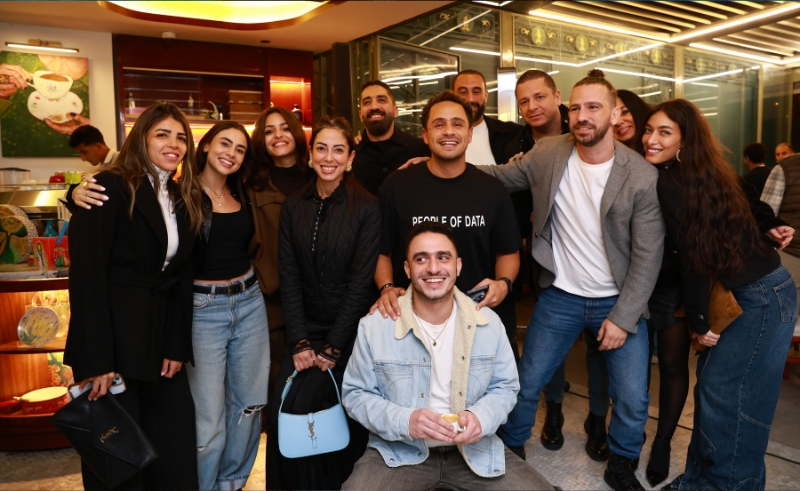
With a network of over 4,000 professionals including business leaders, tech experts, and visionary entrepreneurs, People of Data functions as an incubator that bridges the gap between talent and industry-leading expertise. Beyond its networking role, People of Data serves as a practical engine for career acceleration. The community provides an AI-powered job-matching suite to connect its members with high-growth roles, alongside technical workshops and hackathons that bridge the gap between theory and production-level AI. By fostering a digital space for peer-to-peer mentorship, they effectively remove industry gatekeeping and ensure Cairo's talent is not just trained, but actively employed and industry-ready.
This support system is the manifestation of philosophies held deeply by Kamal, who speaks of AI with a particular type of giddy joy - a fearless speculation that sees the good above the bad. What excites him in particular is the idea that AI and data level the global playing field.
“We used to complain about the West having technologies before us,” Kamal tells StartupScene. “Now, however, with AI, every new development, every new tool, is reaching us at the same time.” This sentiment drives another of People of Data’s mandates: to empower Egypt’s youth. He compares Egypt to India and the characteristics that have made it into a global tech hub. “We’re close to Europe and Asia, most youth are growing up speaking English, and we’re incredibly tech literate,” he elaborates, pointing to an intangible energy that exists in an Egyptian tech ecosystem rife with ideas and talent.
Egypt’s potential as a regional tech powerhouse is built on a demographic profile that is arguably its greatest competitive advantage: roughly 60% of the population is under the age of 30. This youthful energy translates into a massive talent pipeline. According to data from MCIT and ITIDA, Egypt now contributes approximately 50,000 ICT-specific graduates to the workforce each year, representing the second-largest technical talent pool in the EMEA region. This human capital is already driving results on the global stage, as Egypt currently ranks 1st in Africa and 51st globally in the Government AI Readiness Index. With the National AI Strategy aiming for a 7.7% contribution to GDP by 2030 and a target to train 30,000 AI specialists, the country is positioning itself not just as a consumer of global tech, but as a primary architect of it.
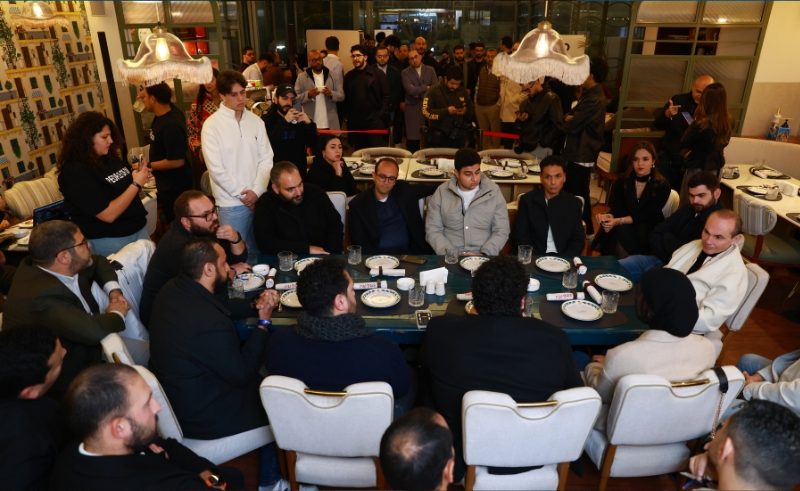
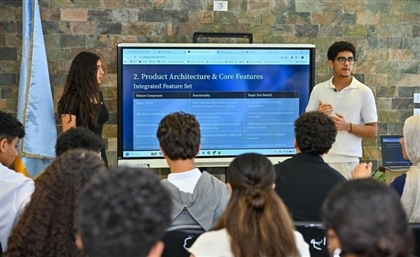
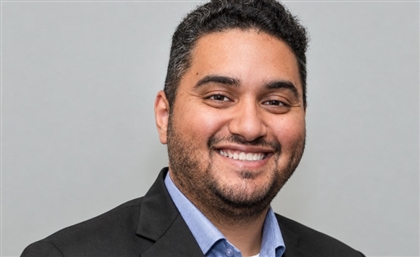
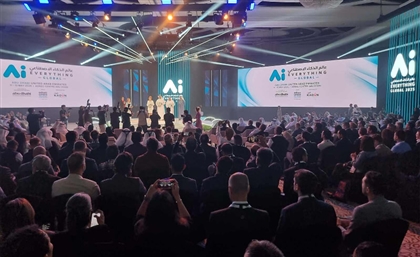
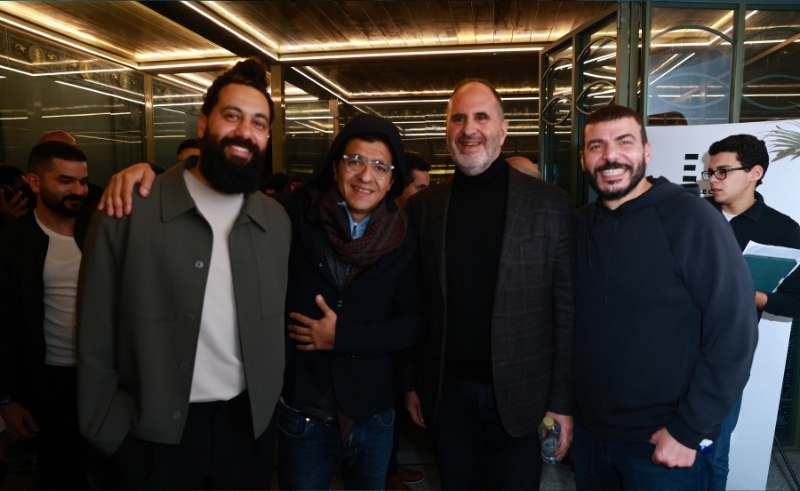
People of Data's most recent gathering showed the full weight of the community’s influence, with AI leaders coming together with business pioneers. Mohamed Farouk, Chairman and CEO of Mobica and investor on Shark Tank Egypt, was not only in attendance but led the evening’s conversations. Farouk believes in an Egypt that can be an AI and data hub. “All my life I’ve relied on AI technology from abroad," he tells StartupScene. “But today, I am happy we are establishing the first AI community, introducing it to the public so that each industry can benefit from the momentum and specialised knowledge held by AI experts within their respective fields.”
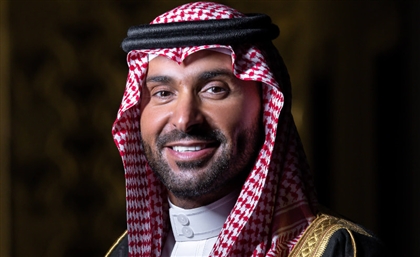
Farouk was joined by fellow Shark, Ahmed Tarek, and serial entrepreneur and host of the ‘Game Plan’ podcast, Ziad Aly, who also spoke. Other notable figures in attendance included Basma Rady, Managing Director at Robin and Chief Data Scientist at Beltone; Emad Shawky, Chief Data and Analytics Officer at Banque Misr; and Dina Sallam, Head of Data & AI at Orange Egypt.
With the presence of such diverse leadership, however, it highlights a central question facing the community: how does a collective prepare for a future where AI might enable the individual to bypass traditional structures entirely?
“Sam Altman said something very interesting recently,” Kamal muses. “He said that soon, we’ll have our first solo-founded unicorn - a lone individual that uses AI agents for everything, from the tech, to the development, to the UI/UX.” It’s a prediction that sends a certain type of chill down one’s spine - because it’s absurd, but because it’s very plausible.
But it’s also precisely this shift toward an autonomous, AI-driven world that makes the existence of a unified local network so vital. As a community, People of Data represents the democratisation of expertise. As the unimaginable realm of possibilities continues to expand, the group ensures that Egypt’s ecosystem remains an active participant rather than a passive observer.
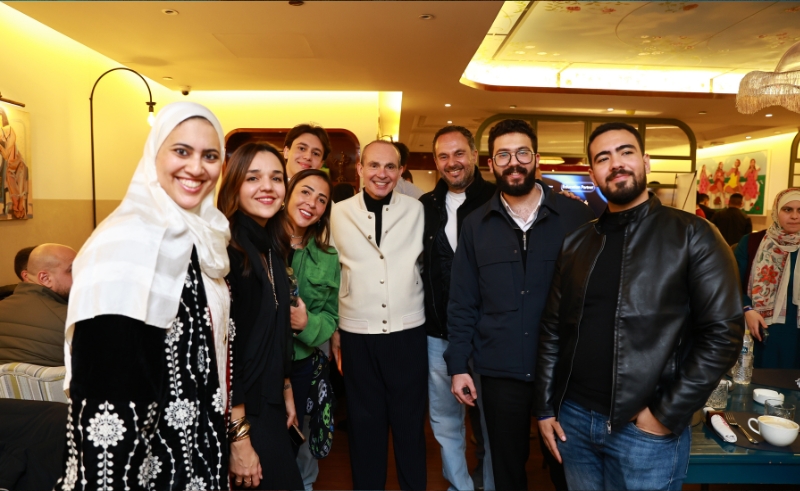
In the face of a future that remains difficult to predict, this community provides something rare: a sense of direction and a shared technical vocabulary that will define Egypt’s digital trajectory for years to come. It is a trajectory built on the conviction that, regardless of how much the technology evolves, the human element remains the most significant variable. As Ziad Aly aptly summarised the evening’s sentiment: “My advice is to bet on Egyptian talent, to bet on youth. If we do, I’m sure we can create miracles.”