

askLex: Lebanon's First AI-Powered Legal Platform for Non-Lawyers
The Beirut-built legal AI platform is betting that Lebanon's fragmented legal system is exactly the place to prove that legal clarity doesn't have to be a privilege.
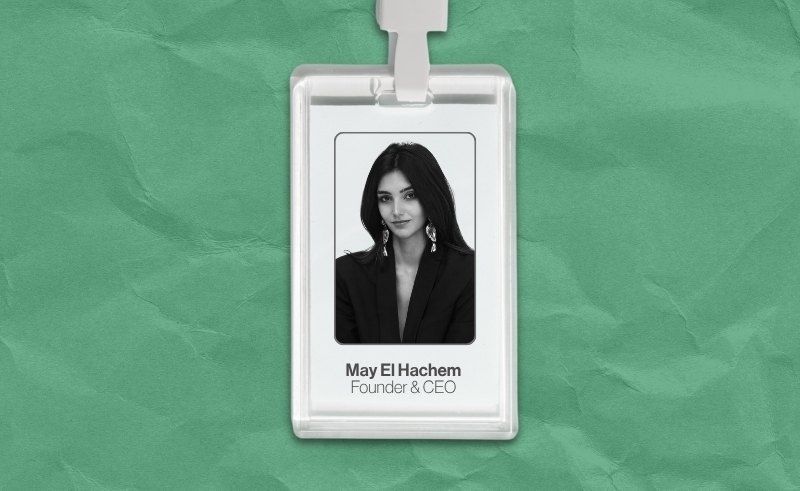
For this installment of NextGen Startups, our series spotlighting emerging entrepreneurs across the MENA region, StartupScene sits down with May El Hachem, the founder and CEO of Lebanon-based legaltech askLex amidst its June, 2026 launch. Built specifically for Lebanese law, the AI-powered legal platform breaks down contracts and legal documents clause by clause, offering users structured guidance grounded in real legal frameworks and procedures, clarity on their rights and next steps, and, where needed, a connection to verified lawyers, notaries, and translators.
El Hachem grew up around lawyers, watching how often people in Lebanon struggle to navigate legal and administrative systems that were never built with everyday people in mind. "You don't know what you don't know," she tells StartupScene. That gap in knowledge costs people money, time, and sometimes the business they were trying to build in the first place, an observation that, repeated across enough conversations, became the starting point for askLex.
While she is technically a solo founder, she is far from alone; her team includes Bachar Attieh, askLex's advisor and Managing Partner at Aldebaran Law Firm, with over 22 years of legal experience across Africa, Asia, and the GCC, alongside engineers, practicing-lawyer legal researchers, a designer, and a marketing lead. El Hachem points to those legal researchers as the roles that matter most and rarely exist at other startups, since their job is making sure every answer the platform gives is grounded in real Lebanese law.
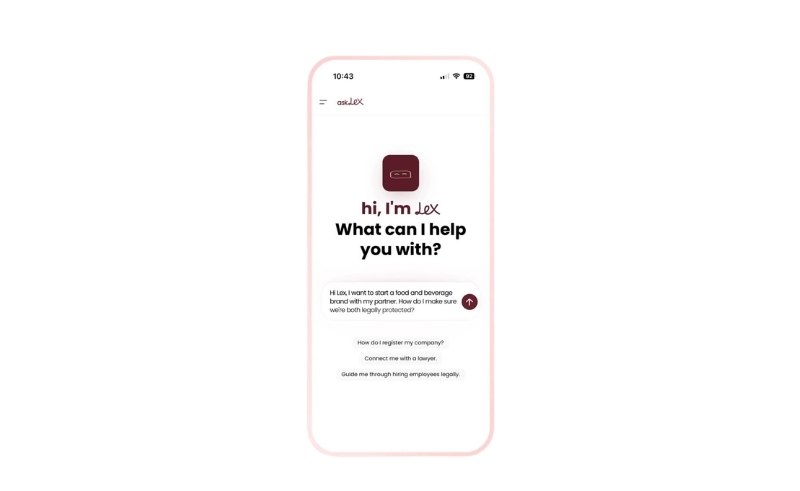
The problem askLex addresses is one most people notice only once it's too late. Legal risk touches nearly every business decision, but understanding what a document does to you still requires expensive expert help. In Lebanon, that compounds: the law is fragmented across Arabic, French, and Ottoman-era codifications, most of it never written with non-lawyers in mind. Contracts get signed without being understood, and disputes happen that a clearer picture going in could have avoided. "Most legal services activate after problems happen," El Hachem says. "We want to help people understand risk before they commit to it."
That's a distinct departure from how legal tech has historically been built: for lawyers, by lawyers. El Hachem describes askLex as the first legal app made for non-lawyers, built on the bet that legal awareness isn't a habit people lack because they don't care, but because the right product never existed. The law, she points out, shapes every part of people's lives, such as the apartment they rent, the job they sign, the business they start. She's also wary of people already turning to general-purpose AI tools for legal questions without realising those tools have no grounding in Lebanese law, calling it a genuinely dangerous gap that askLex, as a specialised, local alternative, is built to close.
That specialisation didn't come from the AI alone. The platform was developed alongside Lebanese lawyers, not to check the output after the fact, but to design the logic underneath it from the start. They mapped how legal questions are actually analysed in Lebanon and what the law requires on the ground, then built that reasoning into the platform. Lex, the product's assistant, doesn't interpret freely; it follows structured workflows built by lawyers and applied specifically to Lebanese law, so every answer is grounded in real legislation rather than a global model loosely adapted to fit.
The core customer today is the Lebanese founder or SME owner who runs into legal documents regularly, not just once, people who, in El Hachem's view, are currently left signing blindly, asking a friend who happens to know a lawyer, or turning to AI tools with no grounding in Lebanese law.
Getting here wasn't just a matter of writing code and shipping it. "Legal is a trust-intensive industry," El Hachem says. "People don't hand you their contracts unless they believe you know what you're doing, and you don't get to prove that until someone gives you their contracts." Being approximately right is fine in a startup's first year; in legal, that's the kind of mistake that breaks trust instantly, which is why every piece of the product has to be legally correct rather than merely helpful-sounding. Layered on top is the cultural challenge of getting people to see the law as something that concerns them, rather than an intimidating field that belongs to someone else.
The timing isn't incidental either. El Hachem believes this is the first moment models have been capable of understanding legal context well enough to assist meaningfully when paired with structured legal validation, and the past year was spent making sure askLex was worthy of it. Lebanon, with its fragmented codifications, three working languages, and decades of legislative gaps, is also a deliberately difficult place to start: if legal AI can work reliably there, it can scale almost anywhere in the region. Lebanon is where askLex starts, but the wider region is where it's going.
That ambition shapes the next five years: not a Lebanese legal chatbot, but a legal intelligence layer that founders and in-house teams across MENA open before they sign anything, expanding jurisdiction by jurisdiction as askLex builds out multilingual models, local legal databases, and institutional partnerships. Trust, El Hachem says, will be earned the way it's being earned now: through outcomes, and a growing network of legal practitioners who validate the system as it expands. "It was never about building a Lebanese legal chatbot," she says. "It was to rebuild how MENA meets the law, and to make an entire generation realise the law was always meant to work for them, not against them."
- Previous Article AD: Tatweer Misr Crowns Winners of 7th Innovation Competition
- Next Article The Foundry is Creating Startups From Problems, Not Pitches