

Snappers AI: The Cybersecurity Startup Fighting Fire With Fire
Through a Talent-AI collaboration model, Snappers is addressing workforce shortage and AI-generated attacks in the same breath.
What happens when AI-programmed malware starts programming its own viruses? As the world accelerates in the direction of everything AI, this risk has perhaps been overlooked, but in our digitalised world it can quickly become an apocalyptic harbinger. Cyberattacks already cost the global economy trillions of dollars each year; by some measures, it’s more profitable than the global drug trade. With weaponised AI introduced into the equation, the potential for damage becomes even more troubling.
“In the coming months, and definitely in the coming years, there will be very sophisticated cyberattacks using AI,” says Hisham Magdy, CEO and co-founder of Snappers, an AI-powered cybersecurity startup founded in 2023. “Viruses are no longer programmed just by humans. In a cyberattack, AI is now capable of making new codes that no one has before in order to mitigate the defensive parameters present in the infrastructure it is attacking, and operating them without an internet connection.”
At the same time as AI-fuelled cyberthreats become more rampant, there is a global shortage of cybersecurity talent that is felt acutely in Egypt, where Snappers chiefly operates. “Since Covid and the AI revolution that has happened, there is higher demand for cyber talents to fulfil the big digital transformation happening in the global ecosystem,” explains Magdy. “In Egypt, it’s even worse because many of our talents end up leaving and going to the surrounding regions.”

To solve both of these challenges at once, Snappers decided to fight fire with fire by using AI as the antidote to the AI threat. “The need has emerged for a company specialised in cybersecurity services using AI products that can fill the gap in this domain,” says Magdy, adding, “you cannot fight a tank with a pistol.”
At its core, Snappers offers its clients comprehensive, 24/7 subscription-based cybersecurity solutions. But this isn’t what sets it apart. What Snappers does differently is the way they use AI in their Security Operations Centre (SOC). Rather than replacing cybersecurity engineers, Snappers uses a talent-AI collaboration model to multiply their impact, equipping them to take on a new league of AI-generated threats in a more efficient way while pioneering a model that bypasses the critical workforce gap in Egypt and the MENA region.
As for why AI can’t just entirely replace cybersecurity engineers, Magdy explains that threat-hunting is not a process that can be automated. “There’s no algorithm for it,” he says. “It’s totally intuitive and based on experience. It’s like a police officer at a checkpoint who knows from experience which person to stop and search.”
However, AI increases the impact of the threat-hunter, both in terms of what they spot and how quickly they spot it. “The difference in time to detect and time to respond is going to be very big between teams who use AI, and teams who don’t.”
Besides the principal task of threat-hunting, Snappers also leverages AI to assist cybersecurity engineers in compliance monitoring and reporting, greatly accelerating processes that could otherwise take weeks or months. For this reason, the product it offers is very attractive for companies that don’t have the required IT manpower at their disposal.
Before founding Snappers, Magdy accumulated years of experience working as a managing director at Global Solutions, a leading systems integrator in Egypt for everything from SMEs to banks and very large enterprises. It was during this period, around 2021, that he spotted the gap in cybersecurity services and solutions for companies. “We thought, ‘How can we provide a portfolio of services that’s not just efficient, but also affordable for companies that cannot hire a full SOC team?”
Based out of Dubai, Snappers AI operates entirely in Egypt. Magdy explains that laws surrounding startup funding and intellectual property rights in the UAE influenced their decision to be based there. However, they plan to expand into the GCC and North Africa in coming years.

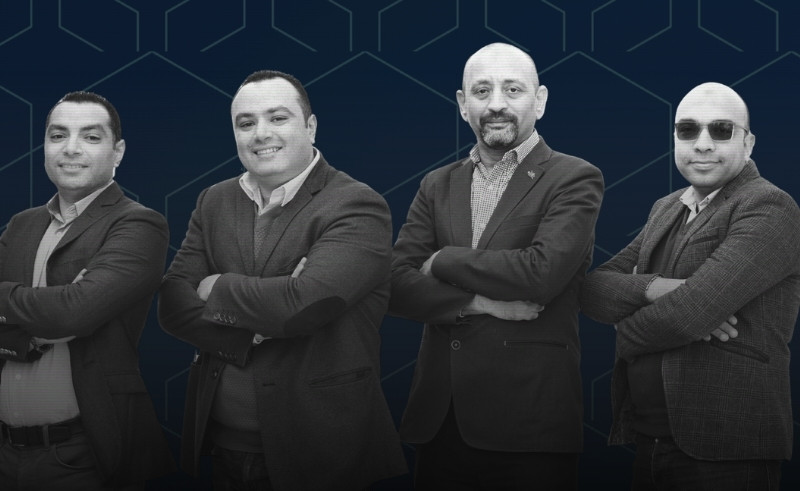
As for Snappers’ own team, a challenge Magdy and his co-founders faced was in aligning their cybersecurity specialists and their developers as they produced their in-house products. “It can be a struggle to make the cybersecurity people speak to developers in the same language. They live in two worlds that are very different from each other, and speak a different language.” However, Magdy sees that they’ve managed to turn this into a strength. “A great thing we’ve done in Snappers is merging between these two worlds, and that’s why we can offer what not many besides us can offer.”
Their upcoming subscription-based product, SnapAI, will soon be entering the market, and it is poised to take their Talent-AI collaboration model to a new level and offer next-generation threat detection. “SnapAI is going to an AI-based web application that will decrease the time to detect cyber incidents, respond, and do compliance reports to just minutes,” Magdy says. “It will help experts proactively detect cyberthreats, and make it so that IT teams won’t have to work months to develop the subsequent compliance reports.”
Expecting a large market appetite based on their recent participation in AI Everything 2026, Magdy is confident that their product will pave the way for future AI innovations in the cybersecurity space—including more products planned by Snappers for rollout in 2027 and beyond.