

MENA Startups Simplifying Cross-Border Shipping
Customs lines, inconsistent addresses, and parcels that change hands are the hidden fees in regional e-commerce, and a new cluster of MENA startups is emerging to take advantage of them.


Moving cargo from one side of a border to another in this part of the world has never been the orderly process that the tracking sites imply. Addresses are missing, customs regulations change from country to country, payments are still made in cash, and a single pallet of goods can pass through six or seven companies in order to reach its destination. Some forecasts put the Middle East and Africa e-commerce logistics market at nearly nineteen billion dollars in 2026, while the UAE and Saudi Arabia position themselves as regional fulfillment hubs, and the distance between that ambition and the reality on the ground is where a particular breed of company has set up shop.
Many of these companies do not own trucks or warehouses. The thing that they offer is the orchestration - a single dashboard, a single API, a way to make a disorganized mess of multiple carriers, customs services, and last-mile delivery drivers look like an organized system.
OTO
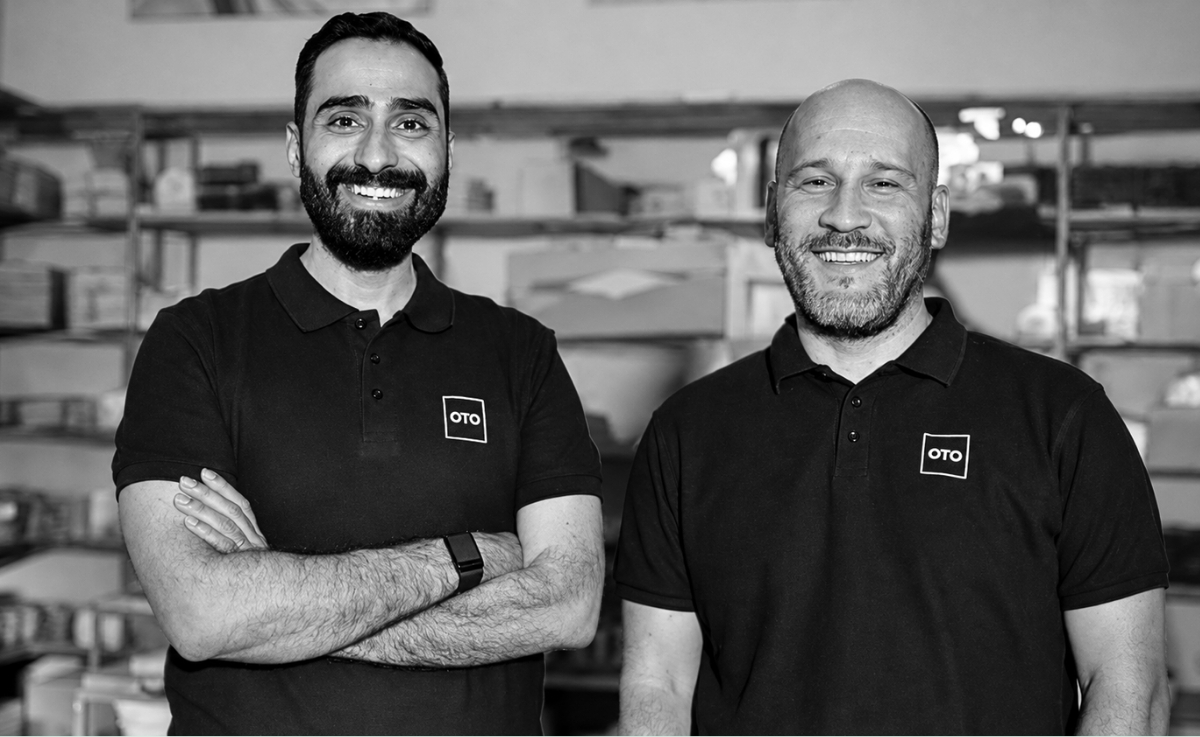
OTO allows an online store owner to enter the company only once and communicate with over 450 local and international carriers at the same time, print labels, track parcels, and reconcile payments made in cash. It was founded in Riyadh in 2019 by Mohammad AlRazaz and Furkan Uzar, and it expanded into the UAE and Turkey on the strength of an $8 million Series A led by the PIF-owned Sanabil Investments, part of a total north of $11 million.
Torod

Torod works on a similar principle from Riyadh, where the platform was founded in 2022 by Faisal Almaklas and Ammar Almaatouq. It slots into the store builders regional merchants actually use, Salla and Zid among them, alongside carriers such as SMSA, Aramex and iMile, and leans on live performance data to pick whichever provider is likeliest to reach a given street. Torod got its $11.2 million pre-Series A from Wa'ed Ventures and Elm, increasing its total funding to about $12.65 million, with its public positioning still largely focused on Saudi and GCC merchants.
SideUp

SideUp started off as VOO, an on-demand delivery company co-founded by Waleed Rashed and Malik Tag in 2017, before reshaping itself into a courier-management layer for regional e-commerce. A single API allows a merchant to interact with a network of national and international carriers, with delivery offered to more than 45 countries. Originally, it offered services to small sellers who were overlooked by major carriers, sending just fifty orders per month.
Wimo

Wimo founded in 2017 in Dubai by Wissam Aboueida and Mohamed Bahaa, focused on the delivery-management issue specifically. It offers a platform to courier companies and businesses with in-house fleets in the UAE and Saudi Arabia, helping them manage deliveries, track agents in real time, optimize routes and collect proof of delivery. It remains the smallest and earliest stage company among these names by public funding record, working with $500,000 seed raised from Dubai Angel Investors.
Qafila

Qafila wanted to create for sea, air, and land freight something similar to a booking site for plane tickets, providing instant quotes, online booking, and real-time tracking via a web dashboard and an app. It was founded in 2017 in Dubai by Atif Rafiq and Jitin Manoharan, it was incubated in the in5 incubator, and built around digital freight forwarding across sea, air and land.
TruKKer

TruKKer is the biggest freight-tech company in the region. It is a digital platform connecting shippers and carriers, founded by Gaurav Biswas in 2016 and offering cross-border service in the UAE in 2018. Since then, TruKKer expanded to Saudi Arabia and Egypt, and followed the old Eurasian trading routes to Turkey and Central Asia, with instant pricing, live tracking, and carrier load board at the core of its service. Funds from Mubadala, STV, ADQ, and Investcorp, including $100 million Series C in 2022, it also secured an up to $300 million trade receivables securitisation facility in 2026.
Trella
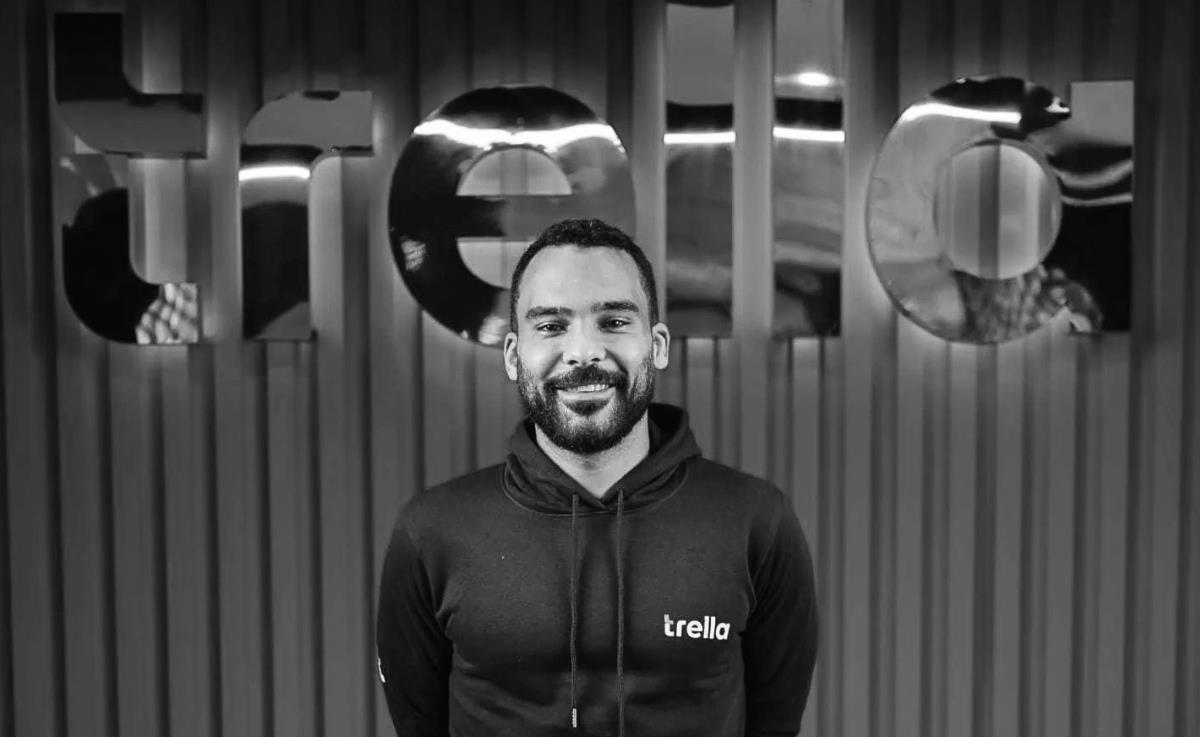
A trucking marketplace, Trella was founded in 2019 in Cairo by Omar Hagrass, Ali El Atrash, Pierre Saad, and Muhammad El Garem. It connects shippers and over fifteen thousand carriers, bringing the whole long-haul process of freight transport onto a digital platform. Coca-Cola, Henkel, and Maersk are among its customers. Its largest round is $42 million Series A in 2021, led by Maersk Growth and the Saudi fund Raed Ventures.
iMile

iMile started off from an odd problem that its founder had in Dubai. The parcels couldn't be delivered due to the fact that many houses in the city lacked a proper address. Rita Huang, former Alibaba and Huawei executive, created a technology-driven last-mile delivery network based on cash on delivery and intelligent routing together with Naveen Joseph, Gao Wenli, and Nancy Chen in 2017, and turned it into a cross-border service, offering customs clearance, overseas warehousing, and direct mail to multiple markets. It positions itself as a bridge allowing Chinese and Southeast Asian sellers to access Arabic-speaking markets. Its largest round is $40 million Series A in 2021, making iMile's total raised funds around $50 million and giving it a $350 million valuation.