

MENA Startups That Achieved Unicorn Status in the Last 10 Years
These MENA startups' billion-dollar rises are reshaping the region’s tech and innovation landscape.

The MENA startup ecosystem has accelerated sharply in recent years, reaching a maturity that would have seemed unlikely a decade ago. The region’s modern unicorn era effectively began with Careem, the Dubai-born ride-hailing platform that became MENA’s first billion-dollar startup before its landmark acquisition by Uber in 2019. Careem’s trajectory — from a mobility app to a diversified super-app spanning transport, delivery, payments and digital services — set the blueprint for how regional startups could scale, diversify and dominate consumer markets.
Since Careem’s rise, the ecosystem has expanded rapidly: 27 tech companies are now valued at over $1 billion, and in the first half of 2025 alone, MENA startups raised $2.1 billion across 334 deals, with Saudi Arabia and the UAE capturing the majority of capital and demonstrating the strongest scalability. This surge reflects a pattern of concentrated innovation — from fintech and deep tech to digital services — powered by strategic investments and an environment that now enables ambitious founders to reach unicorn status in remarkably short timeframes.
Below, we highlight several companies whose rapid growth and recent funding milestones exemplify how the MENA region has evolved in the years since Careem paved the way...
XPANCEO — United Arab Emirates (Deep‑tech)

XPANCEO, founded by Roman Axelrod and Dr. Valentyn S. Volkov, raised a $250 million Series A round in mid-2025 at a valuation of $1.35 billion, formally certifying its status as a unicorn. The Dubai-based deep-tech startup had previously secured $40 million in seed funding in 2023 from Opportunity Venture (Asia), setting the foundation for its leap into large-scale R&D. Built by a team of scientists and technologists, XPANCEO is developing an ultra-thin “smart contact lens” that integrates augmented reality, health-monitoring, night-vision, optical zoom, and other advanced functions into a wearable lens thinner than a human hair.
According to its founders, the company aims to move beyond smartphones and screens by creating a next-generation interface that could redefine personal computing. The new capital is being used to expand its global research team, accelerate regulatory and pilot testing, and push toward commercialisation — making XPANCEO one of the region’s rare deep-tech unicorns in an ecosystem still dominated by fintech and e-commerce.
Tabby — Saudi Arabia (Buy‑Now‑Pay‑Later / Fintech)
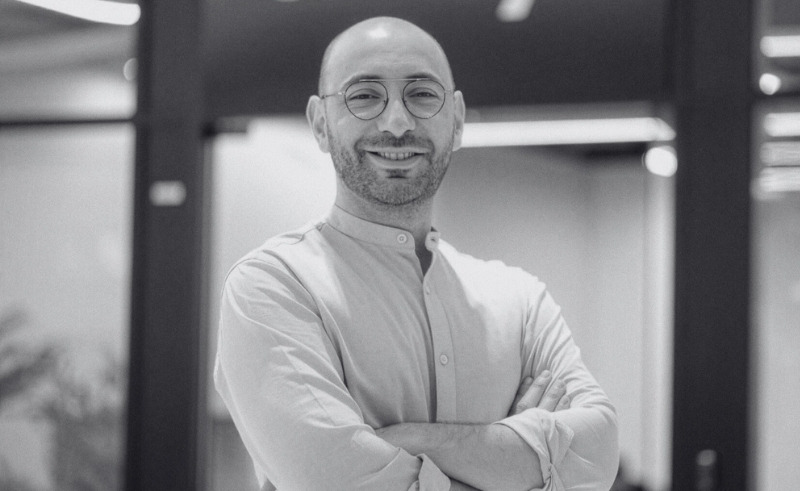
Tabby is one of the fastest-rising BNPL platforms in the region. Founded in 2019 by Hosam Arab, the company has quickly become a regional fintech force, backed by a strong funding trajectory that includes its early Seed and Series A rounds in 2020, a $50 million Series B in 2021, a $150 million Series C in 2022, and a $200 million Series D in 2023, which pushed its valuation to $1.5 billion and confirmed its first unicorn status. In February 2025, Tabby raised $160 million in a Series E round, lifting its valuation to $3.3 billion — a milestone that positions it as the most valuable VC-backed fintech in MENA.
Operating across Saudi Arabia, the UAE, and other Gulf markets, Tabby now reports over 15 million registered users and partnerships with tens of thousands of merchants. Following its latest fundraise, the company said it would accelerate the expansion of its financial-services suite, including digital spending accounts, payments, cards, and money-management tools — solidifying its shift from a pure BNPL player to a broader consumer-finance platform.
Tamara — Saudi Arabia (Buy‑Now‑Pay‑Later / Fintech)
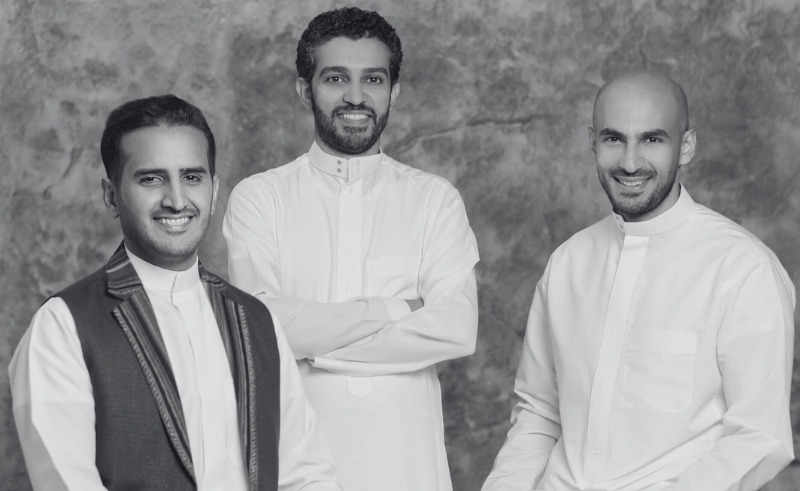
Founded in 2020 by Abdulmajeed Alsukhan, Turki Bin Zarah and Abdulmohsen AlBabtain, Tamara rose rapidly through the region’s fintech ranks, culminating in its unicorn milestone in December 2023 after completing a $340 million Series C round that pushed its valuation beyond $1 billion. The company had already built strong investor momentum through earlier rounds — beginning with its 2020 seed financing, followed by a $110 million Series B in 2021 led by Checkout.com, which at the time was the largest-ever fintech round in the Middle East. Headquartered in Riyadh and operating across the Gulf, Tamara now serves more than 10 million users and tens of thousands of merchants, offering BNPL services across both online and in-store transactions.
What differentiates Tamara is that it doesn’t see BNPL as its endgame; its leadership has repeatedly signalled an ambition to evolve into a broader payments and financial-services platform, extending across shopping, payments and consumer finance throughout the GCC. Reinforcing this shift, in late 2025 the company secured a major asset-backed financing facility of up to $2.4 billion from global institutions to fuel its regional expansion and the growth of its credit and payments infrastructure.
MNT-Halan — Egypt (Fintech / Super-app)
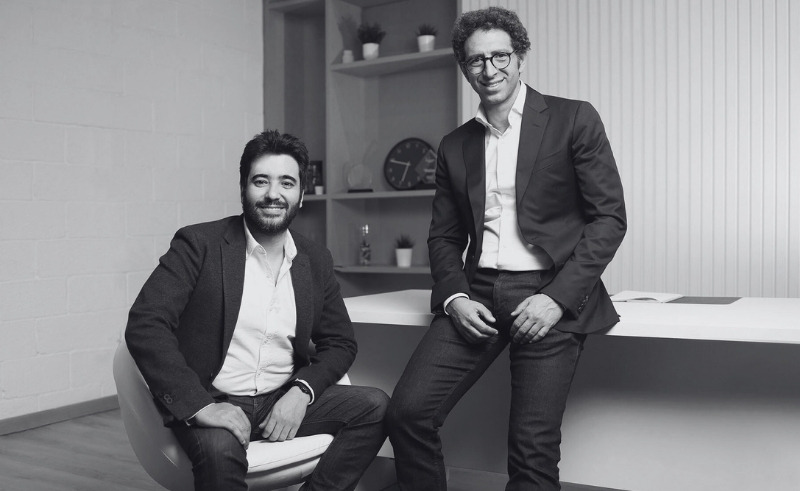
MNT-Halan has grown into one of Egypt’s largest fintech ecosystems. Founded in 2018 (with roots dating back to 2010) by Mounir Nakhla and Ahmed Mohsen, the company has steadily expanded from digital and micro-lending, payments and e-commerce to a broad suite of financial and banking-style services for underbanked populations. In early 2023, MNT-Halan raised a combined $400 million — including equity and securitised bond financing — which pushed its valuation above $1 billion and made it Egypt’s first fintech unicorn. In July 2024 it secured an additional $157.5 million financing round (with participation from the International Finance Corporation and other global investors) to support regional expansion beyond Egypt.
Through this growth, MNT-Halan has built a digital ecosystem encompassing microfinance and nano-loans, SME lending, consumer finance, BNPL, digital payments, peer-to-peer transfers, e-wallets and e-commerce services. The company reports having disbursed billions in loans — reaching a gross loan book of about $1.3 billion by 2025 — and serves millions of customers across Egypt and other markets where it has expanded.
Kitopi — United Arab Emirates (Cloud kitchens / Food-tech)
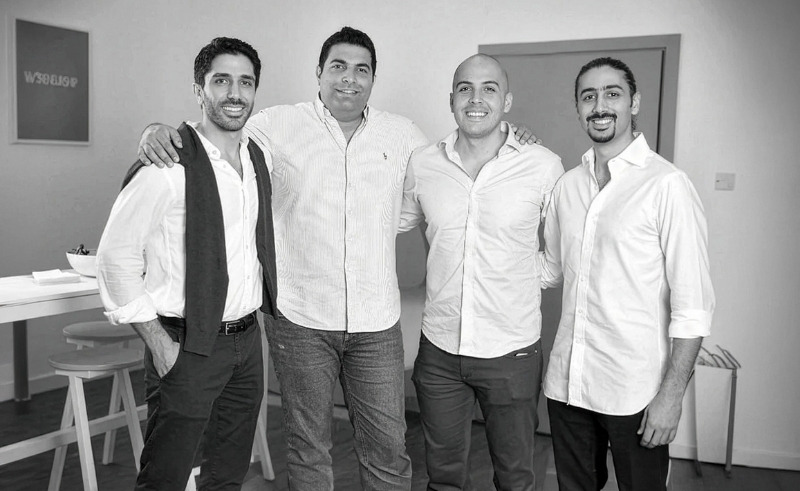
Kitopi, founded in January 2018 by Mohamad Ballout (CEO), Saman Darkan (CTO), Bader Ataya (Chief Growth Officer) and Andy Arenas (Chief Property Officer), operates a network of managed cloud kitchens that prepare and deliver meals for multiple restaurant brands — enabling those restaurants to expand delivery reach without needing their own physical kitchens. By 2020 it secured a $60 million Series B round, and in July 2021 completed a $415 million Series C, led by SoftBank Vision Fund 2 — a deal that pushed it past the $1 billion valuation mark and cemented Kitopi’s unicorn status. Today, Kitopi runs over 60 kitchens across the UAE, Saudi Arabia, Kuwait and Bahrain, partnering with more than 200 F&B brands, from global names to regional concepts.
The company’s proprietary technology — the “Smart Kitchen Operating System” (SKOS) — enables it to manage multiple brands, optimise operations in real-time, scale quickly, and maintain efficiency even with high order volumes. What makes Kitopi stand out is its tech-driven, scalable operational model which allows rapid expansion and broad restaurant partnerships, reflecting the region’s growing appetite for food-tech innovation and delivery-driven dining in dense urban environments.
Pure Harvest Smart Farms — United Arab Emirates (Agri-tech / Controlled-environment farming)

Pure Harvest Smart Farms — the UAE-based agritech company — was founded in 2016 by Sky Kurtz, Mahmoud Adi and Robert Kupstas, with the mission of using controlled-environment agriculture (CEA) to produce high-quality fruits and vegetables in the harsh, arid climate of the Gulf. From its early days building greenhouse facilities in Abu Dhabi, the company raised several major rounds: after initial seed funding, it secured a $60 million growth-finance package in 2021, followed later that year by an additional $64.5 million to accelerate regional expansion. In 2022, Pure Harvest announced its largest raise yet — $180.5 million — bringing total capital secured to more than $387 million, making it one of the most well-funded agritech ventures in the region.
Today, Pure Harvest operates multiple high-tech greenhouse farms across the GCC and beyond, producing a range of crops through hydroponic and climate-controlled systems that dramatically reduce water consumption compared to conventional agriculture. Its unicorn-level valuation underscores not only investor confidence in its technology, but also the region’s strategic push toward food security and sustainable agricultural models suited for water-scarce, climate-challenged environments.
- Previous Article Egypt Grants tpay Licence for Direct Mobile Government Payments