

How Sand to Green is Revitalising Arid Landscapes with Agroforestry
The Franco-Moroccan agritech is building a scalable model for regenerative agriculture, using data, desalination, and agroforestry to turn degraded desert land into productive ecosystems.
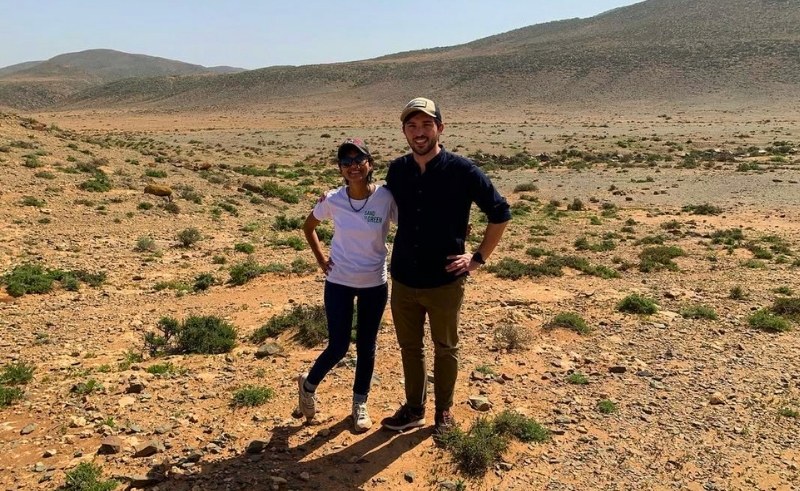
On the Atlantic coast of southern Morocco, where most people see a landscape that’s too dry, too remote, and too depleted to be useful, one company is working to bring it back to life. Sand to Green, a Franco-Moroccan agritech startup, has spent nearly a decade exploring a long-standing question: can the principles behind traditional oases - with careful water management, smart plant selection, and treating soil as a living system - be standardised and scaled?
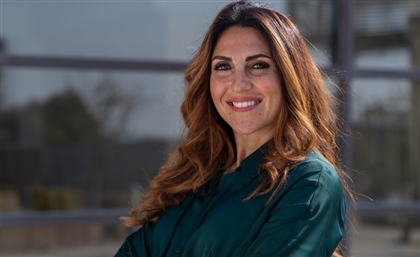
“The turning point came when we realised we were repeating the same steps in every project,” co-founder and CEO, Benjamin Rombaut, tells StartupScene. “We’d assess the land, study water and climate limits, design a regenerative system, then track its progress. It was very dependent on expert input. But if we wanted to grow beyond a handful of pilot farms, we needed to turn that expertise into something more systematic and data-driven.”
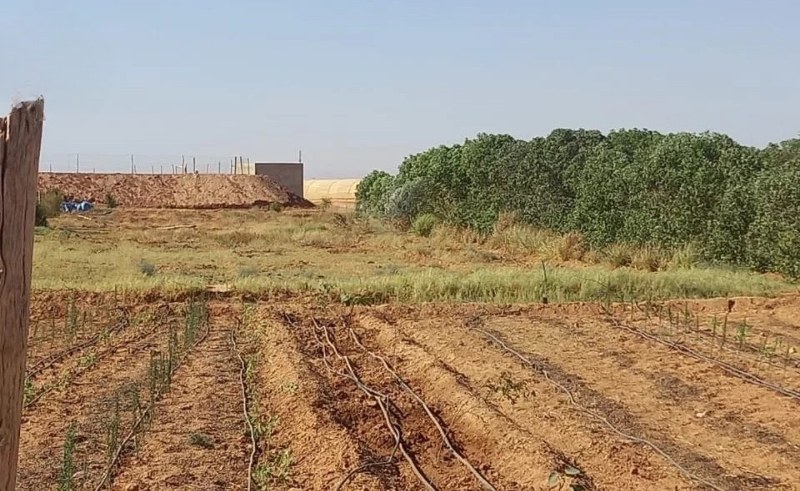
Rombaut’s path into this work began with years of studying desalination, soil science, and desert agriculture. He eventually concluded that the issue wasn’t a lack of knowledge, but a lack of practical delivery. He launched Sand to Green in 2022 with Gautier de Carcouët, who shifted from political science into biodiversity studies, and Wissal Ben Moussa, who had hands-on experience running experimental farms in southern Morocco as desertification advanced. The three met through the Enactus network; Ben Moussa brought invaluable, ground-level insight into what desert farming actually requires.
Although the company officially launched after four years of field research, its core idea goes further back. The oasis itself is a human invention. For centuries, communities in arid regions built sophisticated systems that turned harsh land into productive ecosystems. Sand to Green believes those same principles can be applied more widely today using solar-powered desalination and precise data monitoring - especially in areas with access to brackish water, which is more common than many assume.

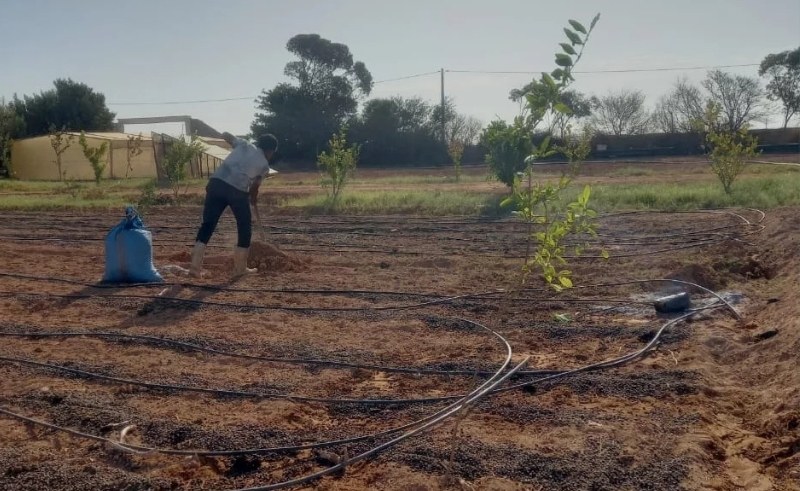
Their approach combines three interconnected systems. First, instead of relying on overused groundwater, they desalinate seawater or brackish water using solar-powered reverse osmosis, delivering it directly to plant roots through drip irrigation to minimise evaporation. Second, they rebuild degraded soil using a mix they call ‘green manure’, made from compost, biochar, and microorganisms to restore moisture retention and biological activity. Third, they use a layered agroforestry model, combining tall trees, mid-level plants, and ground crops. Most species are native to Morocco, chosen for their natural resilience to heat, wind, and saline conditions.
“It wasn’t enough to show environmental benefits; we had to prove there was economic value too,” says Rombaut. “When land starts producing crops, holding more water, and generating income, the concept becomes real.” Some crops, such as rosemary, geranium, and citronella, can be harvested within two years, creating early revenue while slower-growing trees build biomass and capture carbon over time.
Alongside its farming work, the company has developed a software platform called RegenWise, which may be even more critical to scaling the model. “We saw a disconnect between deep agronomic knowledge and scalable decision-making,” Rombaut explains. “Traditional consulting is powerful but hard to scale, while many digital tools lack deep agronomic interpretation. RegenWise was built to bridge that gap by turning soil, water, climate, vegetation, and field data into actionable recommendations and monitoring indicators.” The platform draws on satellite imagery for daily monitoring and converts accumulated field data into recommendations that can guide project design and management without requiring an on-the-ground specialist at every site.
At its core, RegenWise is designed to solve the challenge of repeatability. “Many regenerative projects succeed at a small scale because they rely on a few experts and a lot of manual effort,” says Rombaut. “To scale, you need standardised processes that still adapt to local conditions.” This matters because the regions they target, from Morocco to Namibia, vary widely in soil, climate, and economic context. Their bet is that a strong data layer can handle that variation without reinventing each project from scratch.
The company’s revenue comes from three main sources: high-value crops, consulting and land restoration services, and carbon credits generated as ecosystems recover. While carbon draws investor attention, Rombaut is clear it’s not the main driver for farmers. “Farmers do not transition because of carbon alone," says Rombaut. "They transition when they see better resilience, better yields, lower risk, or better income. Our view is that carbon should be measured and valued, but it should not be the only reason for building regenerative systems."
The gap between ecological timescales and investment timescales is the company's sharpest operational tension. "Investors need measurable results faster than land regeneration naturally happens," says Rombaut. "The challenge is translating long-term ecological transformation into short-term decision signals." The company's response is to surface early indicators through the software platform—vegetation health scores, soil cover readings, water stress data, and crop survival rates—that can demonstrate a project is moving in the right direction without overstating what the first two or three years of regeneration can realistically deliver.
Water remains the toughest constraint. “Without reliable and efficient water use, everything becomes more fragile,” Rombaut says. Infrastructure costs are another hurdle, along with aligning the priorities of different stakeholders. “Farmers, investors, corporations, and public institutions all define success differently - whether it’s yield, carbon, social impact, or financial risk. A big part of our job is creating a shared language through data.”
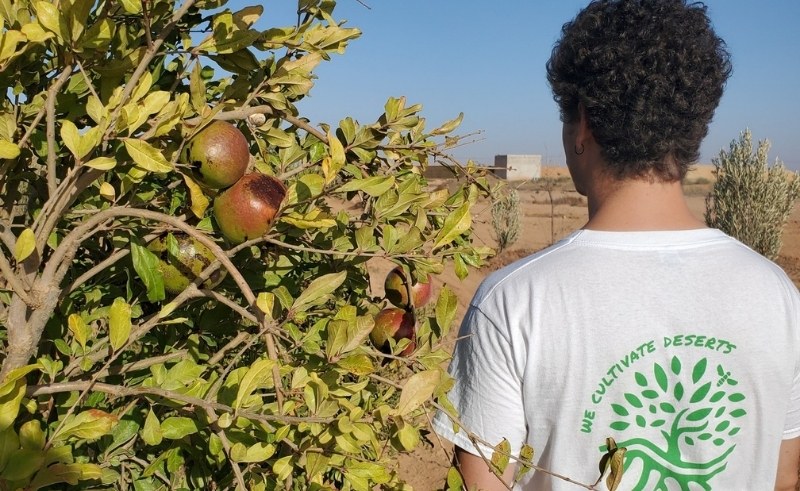
So far, the company has raised $1 million in seed funding from Katapult and the Catalyst Fund, secured a $50,000 grant at the DeepTech Summit 2025, and joined the EBRD’s Star Venture programme in Morocco. It is also being supported by the NextAfrica accelerator as it expands across the continent, with a 500-hectare project already underway.
“Technology on its own isn’t the solution,” Rombaut says. “But it can help scale the right solutions much faster.”