

Kouncel: MENA’s First Legal Edtech Offering On-Demand Learning
Unemployable after the Arab Spring, Ibrahim Saleh built what his law degree didn't give him. Kouncel: Netflix-style legal training, taught by practitioners, used by judges and bankers alike.
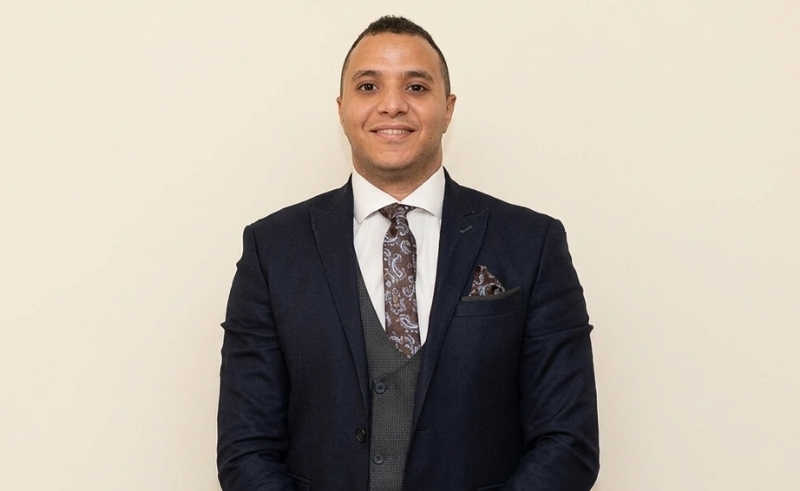
Coming out of the Arab Spring with a law degree in hand was something of a universal joke - a dark punchline for a region in rapid flux. Human rights, constitutional, and administrative law were pulled away from pure theory, becoming an intense interaction with power, politics, and protests unfolding in real time. In 2012, Ibrahim Saleh was a twenty-two year-old with unjustified hope pumping through his bloodstream as he celebrated a Bachelor of Law from Cairo University. What followed was a couple of years of trials and tribulations, not in the sense of arbitration nor in front of a jury, but in simply landing an internship at a reputable law firm that would kickstart his career.
Seeking the qualifications everyone told him he lacked, and fed up with answers that never came, Saleh decided to acquire the skills himself. He started by landing an opportunity to train at the American Bar Association; a few weeks of hands-on experience that really showed him how “transformative practical training could be.” It was the kind of guidance that, had it existed upon his graduation, would have spared him the post-graduation struggle. “That very personal dilemma I experienced - the bridge, or lack thereof, between having an academic legal education and the practical skills that the market actually demanded - was my starting point,” he tells StartupScene.
The road to his most recent venture, Kouncel, started in 2016 with MPL, a straightforward solution of a training centre equipped with experts lecturing about due diligence, term sheet negotiations, and everything a law firm might require from a junior associate. It worked well for a few years, that is until the COVID wave hit them the same way it hit everyone, forcing the world shut and asking everyone to pivot. “That’s how Kouncel was born,” he says, from the simple realisation that content shouldn’t be so volatile. “A platform where you can access high-quality, practical legal education wherever you are, and no matter how late the clock keeps ticking,” he explains.
His vision for the platform came from something so simple that we all indulge in: Netflix, because why couldn’t legal education feel like something you want to watch on repeat?
“I wanted Kouncel's visuals to be as entertaining as Fight Club," he says. "Because law is quite boring, so I wanted to find a way to make it fun."
It was in that moment that Saleh realised he wasn’t just running a training centre anymore. He was sitting on something bigger. But ideas, no matter how big, need fuel. In 2021, he found it in a competition run by the African Development Bank; a chance to convince a panel of experts that a legal edtech was worth betting on. He left with €60,000 and the quiet confirmation that he wasn’t alone in believing it could work.
Kouncel took shape in 2022 as a calculated experiment in an untapped market. With Ahmed Ramadan, Youssef Hamdy, and Hajar Mohamed - a software engineer, videographer, and brand architect - joining early on, the four built the platform’s first prototype and opted for a simple early-access landing page to test demand. The response was an immediate thousand sign-ups that signalled clear interest, ultimately justifying a confident official launch in 2023 that converted 200 of those early birds into paying subscribers within its first month.
This early momentum masked a fragility that would soon test Saleh in ways his Cairo law degree never prepared him for. The first blow came when Saudi Arabia opened its market to regional talent, as Saleh watched his core team get picked off one by one. “My key people left for better opportunities," he says. “I found myself stuck, trying to scale the business with a team that had just been dismantled. I had to rehire and rebuild from scratch.” It was a brutal introduction to startup life, where ideas do not scale but people do, and those people could be recruited away overnight.
A year later, just as the new team found its rhythm, the Central Bank dealt another blow, blocking debit cards for international transactions and freezing Kouncel’s ability to collect payments. “We spent about five months figuring out what to do,” Saleh recalls. Until the solution came in structural changes, establishing a Delaware entity for international users alongside the Cairo-based one that accepts EGP payments just fine. It was stressful, but it forced Kouncel to build the kind of financial infrastructure it would need to scale.
What emerged from those months of rebuilding was a clearer sense of identity. Saleh has always known the platform needed to be practical, his entire origin story was built on the absence of practical training, but now he had to systemise that instinct. The model rests on three pillars: curation, jurisdiction-specific content, and accessibility. The main idea is that their instructors are not academics, but partners and senior associates from leading law firms that spend their days handling real transactions and their nights translating that work into something teachable; content that lives on the platform and can be revisited whenever a user needs it, or even alongside AI tools that help reinforce what they’re learning in real time.
This model has pulled in a far wider audience than the law students Saleh originally set out to serve. As it turns out, HR professionals started using Kouncel to decode new employment legislation and its implications for contracts; investment bankers turn to it to understand the legal mechanics behind transaction; engineers rely on its FIDIC masterclasses; and content creators have taken media law courses to better understand their rights and protect their intellectual property. Then there are the judges. Through a protocol with the Judges Club in Egypt, members of the judiciary use the platform to navigate complex financial instruments like factoring and securitisation - proof, perhaps, that even those expected to have all the answers occasionally appreciate a second opinion.
And while completing a course on Kouncel delivers a certificate that reflects commitment, it won’t yet get you into a courtroom. He describes the model as “qualified not certified,” a way of prioritising practical readiness and a direct path from learning to employment over formal credentials. Still, the ambition stretches further. With the recent establishment of a Board of Trustees chaired by Professor Hassan AbdelHamid, former Dean of the School of Law at the British University in Egypt, the company is laying the groundwork to eventually offer accredited programmes.
Looking ahead, that evolution also points toward a future where AI doesn’t replace the legal mind, but reshapes how one studies and trains. The focus, Saleh believes, will shift from producing documents to understanding them; from drafting to judgement. In that world, practicing law will require relearning as tools continue to evolve, something Kouncel is built to reflect. “The legal profession in the Middle East is actually one of the pioneering professions when it comes to adopting AI,” he starts. “The competition is high, and the impact is already being felt. You can't charge clients billable hours the same way anymore because they know you're using AI. The profession is adapting, and it's adapting fast.”
Kouncel’s push into AI - and its growing reach beyond lawyers - has been accelerated by its latest funding round. In 2025, the platform secured a strategic investment led by Alexandr Boules through IBF & Company. “I was hunting Alex to be honest,” Saleh says, laughing. “We share the same vision of democratising high-quality legal education and making it accessible to everyone. He also challenges me constantly, and that makes me better.”
This investment has also helped push the company into the Gulf, an expansion that isn’t always straightforward for Egyptian startups. The founder is especially careful about how he penetrates new markets due to the sensitivity of jurisdictions. Saleh is a CEO who is not afraid to delegate, choosing to lean on local partners who understand both the legal landscape and, just as importantly, what actually makes a good instructor. “Not everyone who looks good on social meda is a good teacher, that’s why we have a careful, standardised process. But it starts with local expertise.”
For now, Kouncel remains a relatively lean operation with about fifteen people, most of whom are based in Cairo, with the rest spread between Dubai and Riyadh. Saleh is deliberate about how it grows. His first hires now run their own departments and hiring isn’t speculative, but tied to clear targets.
When asked what success looks like five years from now, Saleh doesn’t mention valuations or exits. “I want every law student and every lawyer in the bar association - whether in Egypt, the Gulf, or North Africa - to have access to Kouncel,” he beams. “That’s when I’ll be able to sit back and say, ‘Okay, we made it.” Then he widens the frame. “But I also see success in other professionals looking to have a better understanding of the law; it’s connected to everyone.”
It feels like the natural conclusion of a journey that started with a twenty-two year-old, full of unjustified hope and a law degree, standing at the edge of a profession that had no patience for either. Fifteen years later, Saleh is building the bridge he once needed, not just for lawyers, but for anyone whose work brushes up against the law. Which, as it turns out, is almost everyone.