

Wittify’s AI Agents Run Customer Service in 25 Arabic Dialects
The Saudi startup is filling a gap in call centre efficiency with a 24/7 AI agent that acts like a permanent digital employee.
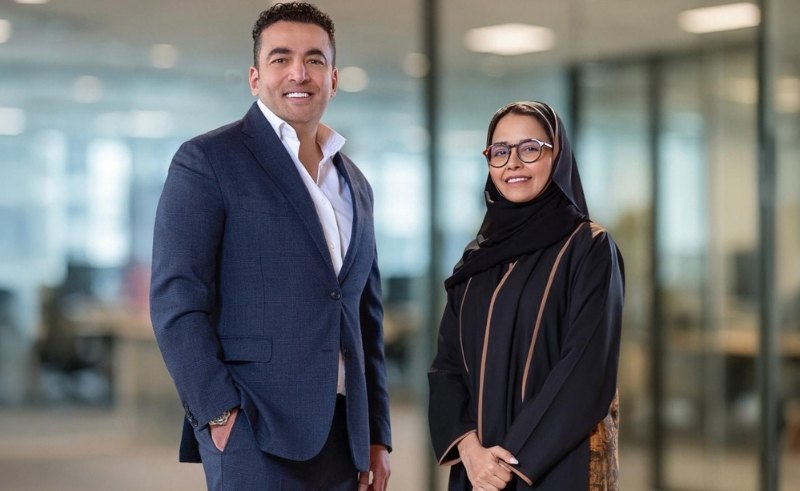
When StartupScene first got in touch with Wittify, the Saudi-based startup pioneering ‘AI agents’ in more than 25 Arabic dialects, we got to trial their product first-hand. Within seconds, an AI agent had replied to our enquiry on Instagram, and within minutes the interview with Wittify’s co-founder and CEO Nader El-Batrawi was set in motion.
“Instead of hiring a moderator for our social media account, an AI agent is like an employee who is online 24/7 and speaks all the languages in the world for a fraction of the cost,” says El-Batrawi, a serial entrepreneur who partnered with Saudi software engineer and professor Dr. Sarah Alhumoud to launch Wittify in 2024. At its core, the Arabic-first AI company creates voice and text agents for all kinds of customer engagement activities, including technical support, leads and sales. As a no-code/low-code platform, Wittify’s agents can be seamlessly integrated into clients’ websites, phone hotlines and social media channels for a monthly subscription fee based on usage.
“We saw a gap in the market in the efficiencies of call centres,” El-Batrawi explains. “It’s a job that has a very high turnover rate, and training new employees is costly. At the same time, there’s a discrepancy in the consistency between different employees across different communication channels.”
El-Batrawi makes a compelling case. Think about when you call your bank or cell phone provider’s hotline: it’s an experience that is often frustrating and disappointing. His confidence in Wittify’s AI agents lies in the fact that they utilise a very broad knowledge base, constructed from scraping the client’s website, FAQs, and local data servers, combined with 24/7 availability and unfailing consistency. The agents can also be authorised to search the internet in real-time to answer customers’ questions.
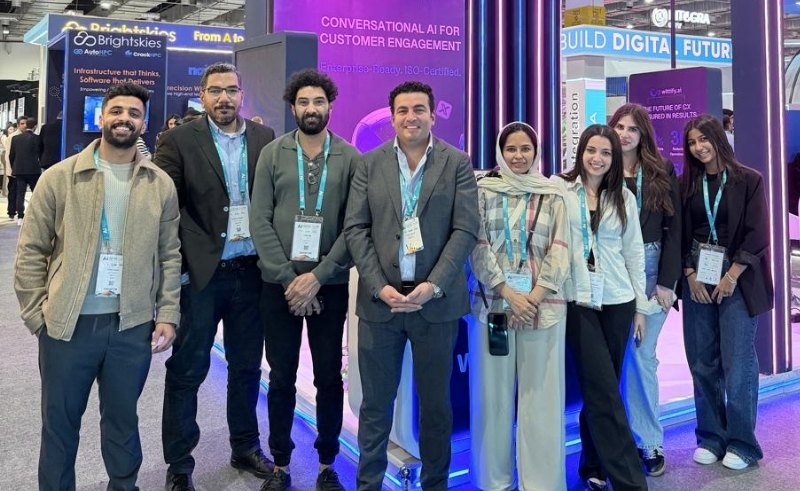
This model has proved more than useful for Wittify’s clients across industries from healthcare to education, retail and travel. Combined with the fact that Wittify’s AI can communicate in nearly all Arabic dialects, the company has quickly emerged as a serious competitor in the MENA region among other AI alternatives, and boasts a team of 35 employees split across offices in Riyadh, Cairo and Dubai.
Beyond their AI agents, however, it's Wittify’s latest product launch that could further propel them into a market leader position.
“What companies are looking for now is quality assurance for all the communications happening with their customers, no matter if it happens through AI or humans,” says El-Batrawi. “Most quality assurance processes only sample 1-5% of calls. Our new system listens to 100% of calls, and can provide insights into customer satisfaction, employee performance and other key metrics.”
Launched in May 2026, this roll-out also included a new product called ‘Chat with Your Documents’ that is particularly useful for companies dealing with sensitive data, like governments or banks. “The problem many government entities face is the privacy of their data,” El-Batrawi explains. “They don’t want to give out sensitive information to companies like OpenAI, so instead our product is locally hosted and connects with the client’s data sources and SQL servers. It’s like ChatGPT but only for your data, and so the data will never leave your premises or be on the cloud.”
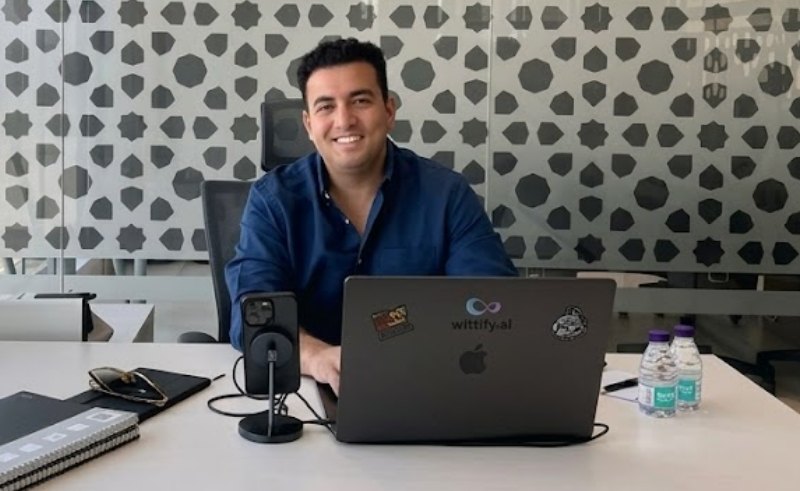
As they continue expanding their products and range of services, Wittify is aiming to raise $5 million in a seed round later this year, building on the $1.5 million they raised in a July 2025 pre-seed round. Ultimately, El-Batrawi says that the goal is for Wittify to become the main service provider for all call centres in the GCC and the wider region, and cement themselves as the market leader in AI solutions for customer engagement.
Nevertheless, he doesn’t underestimate the challenges ahead in a rapidly evolving field such as this one, including in the company’s core Arabic-first products. “Our biggest challenge remains the Arabic language,” he says. “It’s a process that’s a work in progress, from the day we started until today. If it’s 95% accurate now, for example, to make it 96% accurate requires huge effort.”
But improving is not optional. “In our business, the competition doesn’t let you sleep for even a day. If you do, you’ll come back and find everything you’ve done is suddenly old.”