

The AI Shift Every MENA Startup Marketer Needs to Understand
AI can accelerate marketing, but it can't replace the human insight that gives brands meaning.

For MENA startups, building a brand has never been simply about having a good product. It is about understanding the people you are speaking to, the markets you are operating in and the stories that can make audiences care. Today, AI is changing how businesses approach that process, making it easier to create content, reach audiences and build brands at speed.
But speed does not necessarily create connection.
Across the region, marketers are increasingly using AI alongside their own creativity and understanding of local culture. In the UAE and Saudi Arabia, which host more than 79% of all AI ventures in the MENA region (GAD), businesses are adopting the technology rapidly. Yet as AI becomes more widely used, human insight remains central to how brands build trust.
This is particularly important in a region as linguistically and culturally diverse as MENA. What works in one market may not work in another, and content that sounds natural in one country can feel completely out of place in the next. For startups trying to build a brand across the region, understanding those differences is just as important as knowing how to use the latest AI tools.
After seven years of working with clients around the world, I have seen how every brand has its own story. As the founder of Snap Story, I have learned that while AI can support the creative process, it cannot replace the human understanding needed to develop a brand identity that feels genuine. The strongest results come from combining the two.
Traditionally, marketing referred to physical and broadcast channels such as television, radio, print media, direct mail and billboards. While effective, these methods were often expensive and difficult to measure in terms of ROI.
Today, digital marketing revolves around internet platforms, data-driven insights, automation and content creation. It allows businesses to target highly specific audiences through platforms such as Google Ads, Facebook Ads and email campaigns, while also giving companies access to global markets. For startups in particular, it provides the opportunity to launch effective campaigns without the large budgets traditionally associated with advertising.
However, digital marketing also has its challenges. Platform algorithms change constantly, making it difficult to maintain consistent performance. As a result, many startups across the Middle East and Africa skipped traditional advertising altogether and built their businesses directly through digital platforms.
AI is now taking that shift further. Around 74% of startups and technology leaders in the region consider AI a core part of their work. Across sectors ranging from telecommunications to professional services, AI adoption has accelerated through government initiatives and incentives. At the same time, around 78% of consumer interactions with businesses now happen through digital channels.
Everyone is using AI tools, but the real question is how to humanise them. The content you generate should feel like a story rather than simply information. An article by Chmael and Zach shows that 91% of marketers use AI, but only 41% can prove its ROI. Human-AI collaboration delivers the strongest results: AI-powered campaigns generate 32% more conversions, while human-created content attracts 5.44 times more traffic.
However, one of the biggest challenges is the Arabic language gap in AI. Most AI content tools are trained primarily on English-language data. As a result, when MENA founders use AI to write in Arabic, they often encounter grammatical errors, unnatural phrasing and cultural nuances that do not reflect how people actually speak.
This gap stems from several factors. Egyptian Arabic and Gulf Arabic differ significantly in grammar, spelling and tone, meaning content that sounds natural in one country can feel awkward in another. The problem is compounded by a lack of everyday Arabic training data online compared to English, leaving many AI models unable to produce language that feels culturally authentic.
To address this, developers are increasingly training AI on local, region-specific datasets rather than relying on direct translation, allowing these tools to better reflect how people actually communicate.
This challenge is part of a wider question facing brands across the region: how do you build trust in an increasingly digital market?
In MENA, ethical branding is increasingly built around transparency, authenticity and trust. Gulf companies are placing greater emphasis on transparent storytelling by supporting sustainability claims with verifiable data, while diversity and inclusion have become essential to building authentic connections with audiences. Campaigns are no longer simply about selling products or services, but about earning people's trust.
Consumer behaviour is also evolving. The rise of social and community commerce means customers increasingly rely on recommendations and word of mouth when making purchasing decisions. Meanwhile, the rapid growth of digital transactions through services such as Tabby has made consumers more aware of how their personal data is collected and used.
In key markets including the UAE, Saudi Arabia and Egypt, the widespread adoption of super apps has also made service reliability and trust central to the customer experience. Customer loyalty is increasingly driven by credibility, transparency and data security rather than marketing alone.
Research by Mohd Amin et al. examines how AI adoption is shaping modern marketing strategies. It shows how businesses can use AI to predict market trends and optimise their strategies. At the same time, the research highlights that the biggest challenges are not the technology itself but organisational issues such as data privacy, algorithmic bias and creating a company culture that embraces change.
Marketing is ultimately about understanding human behaviour. Marketers ask questions to understand what motivates people and what their businesses need. Why do people make purchasing decisions? What makes them trust a brand? Understanding those answers is just as important as understanding the product or service itself.
For MENA startups, combining storytelling with AI is not simply another marketing strategy. It is the difference between being seen and being remembered. Successful brands are not focused only on using AI. They are focused on combining AI with a human voice, building trust and overcoming the region's language and cultural challenges.
From my experience working with clients at Snap Story, we always begin by asking questions that help us understand both the business and the people behind it. We combine human insight with AI tools to develop marketing strategies and create content where storytelling genuinely reflects each brand.
Every brand has a story. My job is to find it, shape it and make sure the right people hear it. Over seven years of working with clients around the world, I have learned that the best marketing is not about selling - it is about connecting.
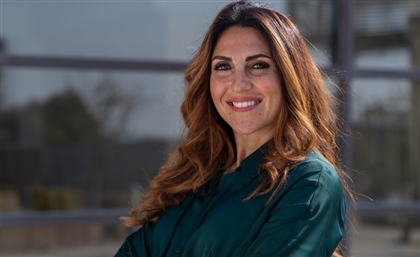
Writer Bio: Every brand has a story. Sara Hassouneh's goal is to find it, shape it and make sure the right people hear it. As the founder of Snap Story, she has spent the last seven years building AI-powered marketing strategies, developing content and helping brands find their voice. She holds an MBA from Al Quds University and a Bachelor's in Mass Communication from Abu Dhabi University, alongside certifications in digital marketing and social media marketing.
- Previous Article KamelPay Partners With Paymentology on Corporate Card Platform
- Next Article National Experts Program Launches First AI Learning Module