

Not All Clouds Go Down: Why Regional Infrastructure Matters in MENA
Recent cloud failures across the GCC have proven that innovation requires more than migration - it demands a shift from single-cloud dependency to true resilience.
From Saudi Arabia’s tech-led ambitions to Dubai’s status as a global innovation hub, the digital landscape in the MENA region is moving at breakneck speed. It is no longer just participating in the global digital economy - it's defining its future on the global stage. However, recent weeks have served as a sobering reminder that the cloud is not invincible.
When major data center outages recently rippled through the GCC, ‘hard downs’ in critical availability zones in Dubai and Bahrain left companies scrambling. Digital storefronts went dark, and more importantly, customer support lines - the lifelines of brand loyalty - fell silent. For many, it was a moment of crisis, and for the region’s tech leaders, it was a wake-up call. What these situations have come to highlight is that the issue isn’t outages, but how foundational systems are designed and built to respond when one occurs.
For years, the move to the cloud was marketed as a cure-all for reliability. But as many regional businesses discovered during these recent disruptions, a cloud-dependent system is only as strong as its foundational architecture. When a primary provider faces a failure, a business without a contingency plan isn't simply experiencing downtime, but is effectively out of business.
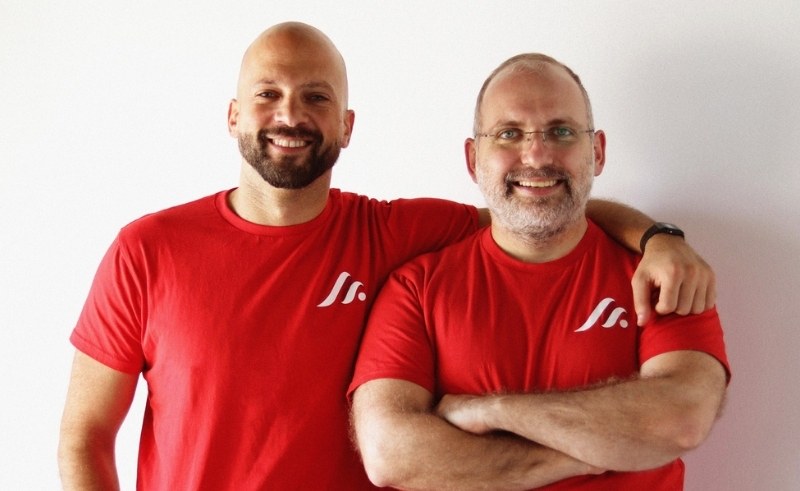
This vulnerability has turned the spotlight on specialised regional providers like Maqsam. As an Arabic-first, AI customer service software, Maqsam has become a critical layer of the region’s infrastructure, powering the contact centre operations of over 2,000 organisations. Maqsam focuses on localised connectivity and multi-cloud architecture, and aims to provide a safeguard against the volatility of global cloud outages.

"The past few weeks have been tough for a lot of businesses in the region,” explains Sinan Taifour, co-founder and CEO of Maqsam. “The systems we rely on can fail, and usually at the worst possible time. That's why business continuity can't be a backup plan. It has to be the foundation."
While much of the market felt the impact of recent failures, a segment of businesses remained operational. These were the organisations utilizing infrastructure designed specifically for the complexities of the region . Maqsam’s approach, for instance, utilises a multi-cloud, multi-region infrastructure designed to help keep customer conversations running, regardless of a failure in a single data center or provider. The platform distributes workloads across geographically diverse zones and multiple cloud environments within the same country as the company in question, a model that eliminates the single point of failure that sidelined so many others during the recent ‘hard downs’.
"While many businesses lost service during the recent disruptions, our clients stayed connected. No outages, no dropped calls,” Taifour adds. “This region is building, innovating, and growing, and it deserves infrastructure that rises to its ambition."

However, resilience in the modern landscape isn't just about keeping hardware online; it is about ensuring the quality of service never fluctuates, even when human resources are stretched or displaced. This is where the next frontier of regional innovation - namely, Arabicnative AI agents - becomes vital for continuity. Rather than just maintaining connectivity, these tools are designed to drive regional business growth by handling the complex, automatable conversations that standard AI often misses. By speaking Arabic natively across diverse dialects, these agents remain available even when human staff cannot be, preventing the disconnected customer journeys.
"We're not just keeping businesses connected; we are building the tools that are helping regional business grow,” said Fouad Jeryes, President & Co-founder of Maqsam. “Our AI agent speaks Arabic natively, across dialects, and can be available even when human agents simply cannot. It understands the complexity of regional business and handles the conversations that can be automated."
This ‘always-on’ capacity provides a necessary layer of business continuity. In the event of a local disruption that prevents human teams from reaching the office, native AI voice agents stand ready to handle inquiries in natural language to ensure the customer journey remains smooth and uninterrupted.
For enterprise leaders who have spent decades managing legacy systems like Avaya or Cisco, the move to cloud-based communication can feel like a leap of faith, particularly when regional outages occur. However, industry experts suggest the shift isn't about moving away from reliability, but toward a more modern, regionalised version of it.
If the recent infrastructure failures in Dubai and Bahrain taught the market anything, it's that downtime isn't something businesses across the region have to accept. We live in an era where multi-region failovers and native AI are no longer luxuries - they are the baseline for any company serious about customer experience.
As the GCC continues its transformation into a tech powerhouse, the businesses that thrive will be those that choose partners prioritising resilience over convenience. Whether it is through redundant cloud architectures or AI that understands the local nuances, the goal for the region is ensuring that the conversation never stops.