

OP-ED: An Egyptian-American Fund's Bet on Local Talent
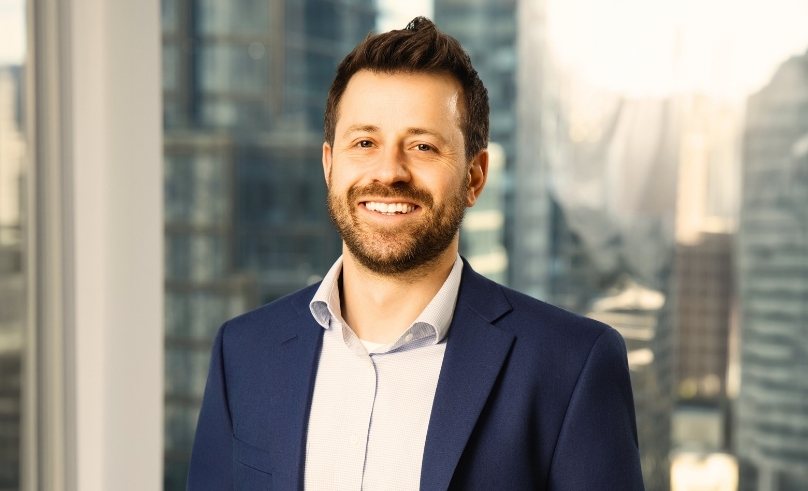
Cornelius Queen of the Egyptian-American Enterprise Fund reveals the investment thesis behind a $500 million success story.
How do you turn a $300 million investment into more than $500 million in an economy where the local currency has lost more than 80% of its value?
Conventional financial wisdom says you don't. When macroeconomic shocks hit, foreign capital typically flees. But over the last fifteen years, a quiet success story has been taking shape in Egypt – one that offers a new playbook for both emerging markets investing and American engagement in the Middle East.
After the 2011 revolution, Egypt's economy was fracturing. Foreign investment had dried up and the country was entering a period of political transition. In response, the US Congress created the Egyptian-American Enterprise Fund (EAEF) to stimulate Egypt's private sector.
Unlike traditional bilateral foreign aid, EAEF does not fund the Egyptian government or make grants. Instead, it is a private investment fund overseen by an independent board of Egyptian and American investment professionals with a mandate to invest directly in Egypt's private sector.
EAEF pairs long-term capital with Egyptian expertise to advance a shared goal: strengthening Egypt's private sector. It does this by investing in local businesses and fund managers who understand the market and can help those businesses grow.
Over the last fifteen years, EAEF has become the largest US-backed investor in Egypt. Through seven first-time Egyptian fund managers, we have invested in more than 150 companies and currently support over 67,000 local jobs.
So how do you overcome an 80% devaluation?
Not from an office in New York. You do it by backing Egyptian investment managers who can identify promising businesses with the management teams and business models to withstand currency shocks and keep growing.
In 2014, we began working with Lorax Capital Partners, a first-time private equity firm that helped define our early strategy. In 2015, Lorax helped us make our first investment in Fawry, Egypt's largest digital payments platform. Today, Fawry reaches 55 million Egyptians through 371,000 point-of-sale terminals (POS). Its success reflects our efforts to expand access to financial services for unbanked Egyptians by investing in growing companies with platforms that could reach millions.
It also reflected Lorax's strategy of investing in companies that could thrive amid macroeconomic volatility. Because Fawry earns a percentage of every payment made across its network, its revenues have soared as successive devaluations have led to higher prices and increased the value of its share of each transaction. In a country where many still lack access to a bank account, Fawry has also benefited as more Egyptians adopt digital payments.
The same formula applied to other investments. Contact Financial, one of Egypt's largest consumer finance platforms, has provided credit to hundreds of thousands of customers in an underserved market. As devaluations raised the price of consumer goods, Contact's average loan sizes grew with them, expanding revenues and lowering default rates as financed assets became worth more than the outstanding balances. Another Lorax investment, Orchidia, a generic ophthalmology manufacturer, gained market share after the 2016 devaluation made imported pharmaceuticals more expensive.
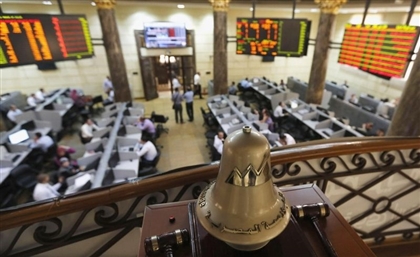
The results speak for themselves. Fawry and Contact both had IPOs on the Egyptian Exchange and have generated more than $150 million in returns for EAEF. Orchidia was sold to a regional investor in early 2026 after experiencing significant growth. These outcomes reflect a disciplined investment thesis by a local fund manager who understood the market and backed companies that could emerge stronger from macroeconomic shocks.
After helping Lorax build a track record, EAEF turned to supporting other first-time fund managers. One of them was Tanmiya Capital Ventures. In 2019, TCV helped EAEF invest $11 million in Abu Auf, a fast-growing coffee and snacks retailer. TCV worked with Abu Auf to triple the company's branches, expand its product range and generate strong dollar returns despite multiple devaluations. When Abu Auf was sold in 2022, the exit eventually returned more than $51 million to EAEF and paved the way for TCV to raise its own independent fund.
We applied the same approach to venture capital by backing Flat6Labs, Algebra Ventures and Foundation Ventures. Together, they have invested in over 100 early-stage companies and helped Egypt become the third-largest start-up ecosystem in the Middle East, attracting attention from globally renowned investors such as Sequoia Capital.
Our newest investment manager, East Lane Partners, is one of Egypt's most promising private equity firms and reflects our continued efforts to support the next generation of Egyptian fund managers.
Today, EAEF's track record speaks for itself. The estimated market value of our assets exceeds $500 million, nearly double our original $300 million in congressional funding. That record shows how patient capital and disciplined, locally led investing can generate strong returns even through repeated devaluations.
It also highlights why private equity can be an effective tool for private-sector development. By linking compensation to investment performance, fund managers are incentivised to identify promising companies and help them grow. When paired with long-term capital, this model can give management teams the time needed to strengthen and expand their operations rather than pursue quick exits. Over time, that focus on long-term value creation can lead to stronger companies and better returns.
But no investment model prospers without a compelling market. Egypt's population of more than 100 million, its strategic location between Africa, Europe and the Middle East, and its deep bench of talented entrepreneurs offer significant opportunities for long-term investors. In our view, Egypt remains one of the most attractive yet underappreciated investment destinations in emerging markets.
Looking ahead, the lessons from EAEF extend beyond Egypt. Our experience shows how enterprise funds can be scaled across the Middle East to advance locally led private-sector development and long-term stability. At a time when the limits of U.S. military power are increasingly apparent, enterprise funds offer an alternative approach to American engagement in the region – one rooted in investment, shared economic interests and partnerships.
Written by Cornelius Queen
Cornelius Queen is Senior Vice President of the Egyptian-American Enterprise Fund, a private investment fund established by the US Congress in 2011 to support Egypt's private sector. He is the co-author of A Daring Enterprise: A US-Egyptian Partnership and the Case for Soft Power (American University in Cairo Press, 9 June).