

Inside MENA’s Digital Banking Shift With onebank CEO Sherif Elbehery
As MENA races toward a digital-first financial future, Elbehery breaks down the forces reshaping the region and what it takes to build trust in a branchless era.

Once, banking across the Arab world was an exercise in physical presence- marble floors, long queues, ink-stamped paper slips. That era is rapidly receding. In its place emerges a generation of digital-first banks built on cloud infrastructure, AI, and user-centric design. And at the centre of this regional transformation stands Egypt’s onebank, the country’s first fully licensed digital-only bank and a benchmark for how Arab finance is being rewritten.
Egypt’s financial system reached a decisive moment in August 2025, when the Central Bank granted final approval for onebank to operate as a digital-native institution. Evolving from Banque Misr’s Misr Digital Innovation (MDI) and set to launch in 2026, onebank represents a structural repositioning of Egypt within a wider Arab fintech movement.
Across the Middle East, digital banking is no longer an experiment but a strategic priority. Saudi Arabia’s licensing of digital banks under Vision 2030, the UAE’s rise of players like Wio and Zand, and Bahrain’s role as a regulatory sandbox all signal a coordinated regional push toward cashless, data-driven economies.
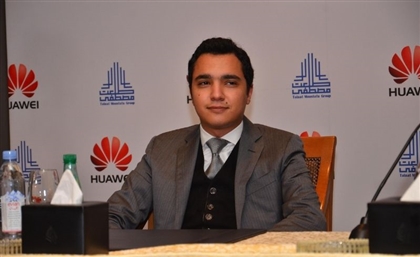
onebank’s CEO, Sherif Elbehery, describes this shift not as a sudden disruption but as a convergence of forces reshaping how Arab societies engage with finance. “From my perspective, there isn’t a single force driving the Arab world’s shift toward digital banking; it's the convergence of the trust, inclusion, and technology that is fundamentally reshaping the region’s financial landscape.” Regulations have matured, consumer expectations have shifted, and technology has expanded what banks can deliver. For Egypt, a nation with a large youth population and historically low financial inclusion, this alignment is particularly meaningful.
Egypt sits within one of the world’s youngest regions. With nearly 60% of the Arab population under 30, the demand for intuitive, mobile-first financial solutions is no longer optional. Smartphone penetration, especially in urban centres, has transformed the mobile screen into the new banking branch- accessible, constant, and personalised. “With a young demographic and high smartphone penetration, the Arab world is primed for this shift. For the Arab world’s young, connected population, this will be one of the most transformative shifts in how people engage with money” he reiterates.
This is precisely where onebank positions itself: not as a digital replica of a traditional bank, but as a bank built natively around the way people live today. “As a digital-native bank, we offer seamless onboarding, real-time services, and personalised, mobile-first journeys- supported by intuitive design, chat-based support, and analytics-driven experiences.”
But digital transformation in the Arab world is not only about speed and convenience; it is also about trust- historically rooted in personal interactions and physical presence. Elbehery acknowledges that shifting from a branch-based culture to digital-only finance requires more than a new interface; it demands a new kind of confidence. “Digital-native banks must demonstrate security, transparency, and reliability from day one.”
In Egypt, as in many Arab markets, cash-heavy behaviours have long been linked to trust and familiarity. onebank’s approach is to anchor digital adoption in transparency, security, and consistent service, supported by a regulatory framework designed expressly for digital institutions. “Clear licensing standards, cybersecurity requirements, and consumer-protection policies now provide the oversight and confidence needed for adoption.”
The most transformative promise of digital-native banks across the Arab world lies in financial inclusion, and Egypt is no exception. “Approximately half of adults across several Arab economies remain unbanked or underbanked. Digital-native banks are uniquely positioned to meet the needs of youth, women, freelancers, micro-entrepreneurs, and gig-economy workers – segments traditionally underserved by traditional systems.”
onebank directly targets this gap. By using mobile-first onboarding and national identity verification, the bank reduces long-standing friction points and brings everyday financial tasks- payments, accounts, transfers- onto a single, accessible platform. This is not simply modernization- it is access.
Money is emotional, relational, and cultural. onebank’s model acknowledges this by integrating products aligned with the values of Egyptian consumers- from transparent pricing to ethical and Sharia-compliant options. Digital innovation, in this approach, does not override cultural context but expresses it.
Next-generation tech stacks, cloud-native infrastructure, and AI-driven personalisation enable onebank to deliver experiences that legacy systems cannot. “As digital-native banks arise and scale, we will see more rapid innovation cycles, deeper collaboration with fintech ecosystems, and advanced financial tools that put customers in control of their financial lives.” The bank reflects a broader truth emerging across the region; the institutions that succeed will be those capable of processing real-time data, adapting to customer behaviour, and innovating at the pace of digital life.
Traditional banks are evolving in parallel- modernizing apps, launching digital sub-brands, and partnering with fintechs- but digital-native institutions like onebank represent the frontier of what is possible when technology is the foundation rather than an upgrade. “Over time, this shift will take the region from a branch-centric culture to a digital-first one, where customers manage every aspect of their finances through intuitive mobile experiences.”
MENA’s fintech sector is now among the fastest-growing globally, expected to expand at more than 35% annually through 2028. Yet the real transformation is philosophical: banking is shifting from an infrastructure-led industry to an experience-led one. From exclusivity to inclusion. From physical presence to digital intelligence.
onebank’s forthcoming launch is emblematic of this turning point in Egypt- and of a wider regional horizon where trust, data, and accessibility form the new pillars of financial identity. As Elbehery puts it: “Trust provides confidence, technology provides capability, and inclusion delivers impact.”
Egypt’s first digital-native bank is not merely joining a regional trend but also helping define it. And as onebank prepares to open its digital doors, it signals the beginning of a different kind of financial future for the Arab world- one written not in marble, but in code.
- Previous Article Plus VC Targets 40 Startup Deals & $10 Million Capital Increase
- Next Article BRIDGE Summit 2025 to Showcase Media & Tech in Abu Dhabi